
Home » Products » Pontoon Dredge Pumps »
PONTOON DREDGE PUMPS
Sediment Slayer Pond Dredge
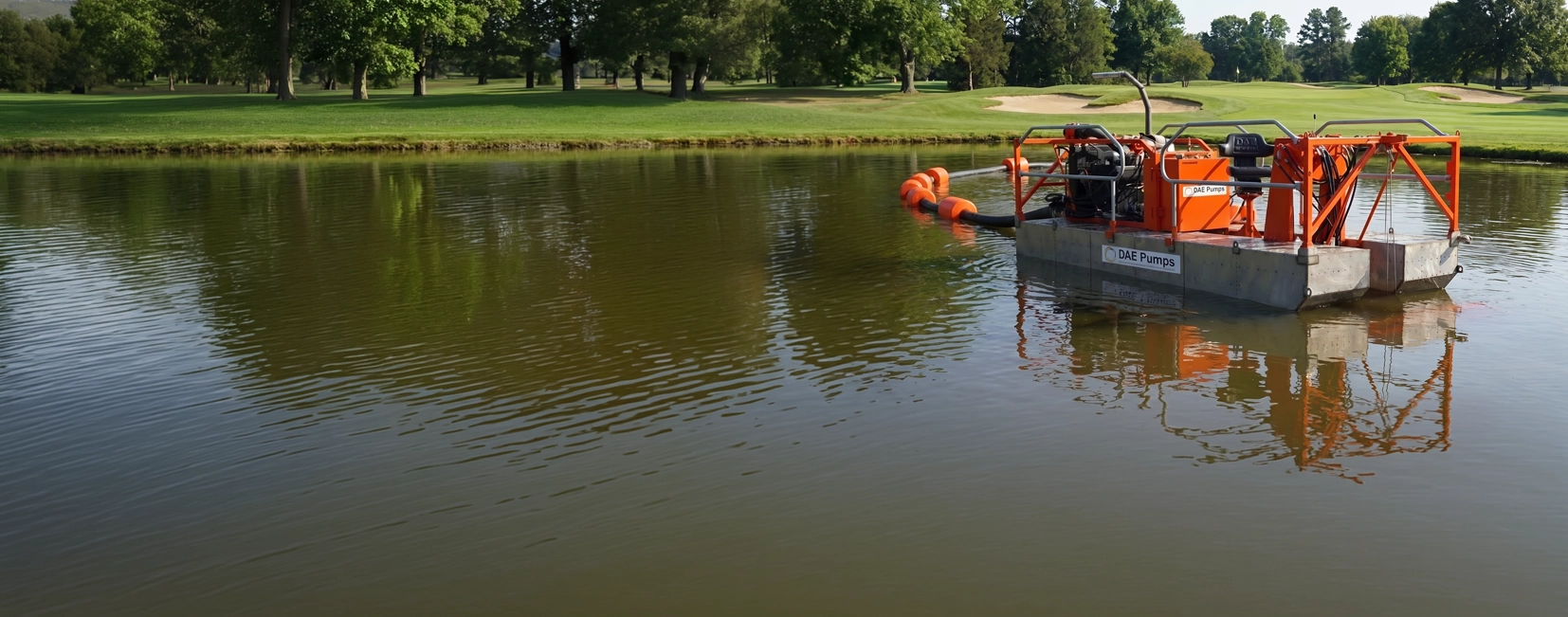
The most powerful two-man pond dredge — a compact, easy-to-operate pontoon dredge that removes sediment, sludge, and debris at up to 1,500 GPM.
Built around a heavy-duty 6-inch non-clogging submersible slurry pump and an extra-wide 66″ cutter head, the DAE Pumps Sediment Slayer reaches sediment that heavy equipment cannot — ideal for HOA lakes, marinas, golf course ponds, lagoons, and industrial basins.
- Flow up to 1,500 GPM — passes softball-sized debris
- 65 HP Cummins 4-cylinder diesel — up to 10 hours per tank
- Dredges up to 13 ft deep (15 ft with boom extender)
- 66″-wide cutter head with excavator-grade teeth
- Trailers, launches, and dredges without damaging the shoreline
Need help now? Call (760) 821-8112
1,500 GPM
MAX FLOW RATE
65 HP
CUMMINS DIESEL ENGINE
13 ft
STANDARD DREDGING DEPTH
66″
CUTTER-HEAD WIDTH
What Is the Sediment Slayer Pond Dredge?
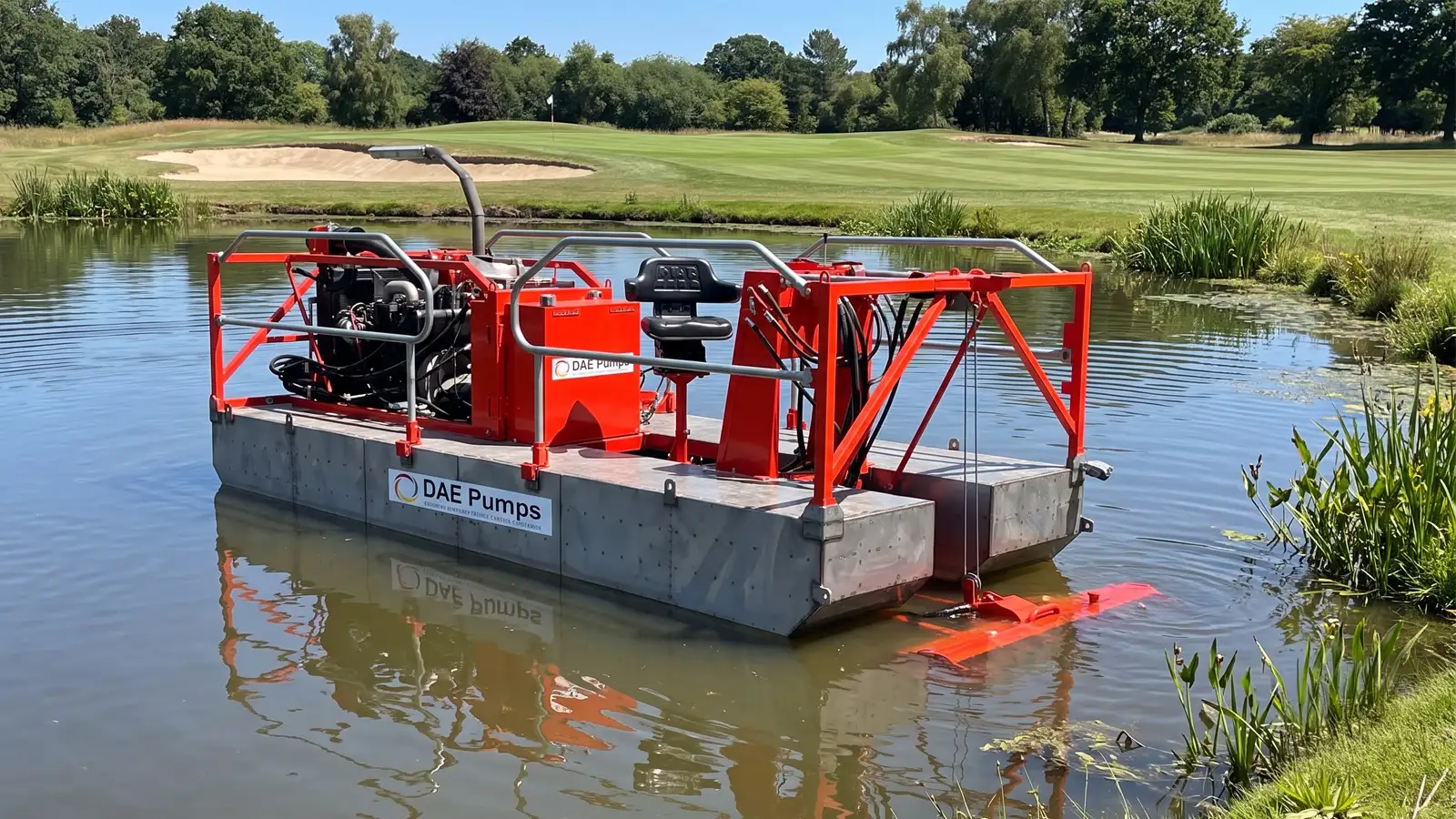
The DAE Pumps Sediment Slayer Pond Dredge is a compact, easy-to-operate pontoon dredge, the most powerful two-man dredge in its class, built for industrial pond sediment removal. It combines an extra-wide 66″ cutter head with a rugged, non-clogging 6-inch submersible slurry pump to excavate and move sediment, sludge, aquatic weeds, and debris as slurry at up to 1,500 GPM, passing softball-sized solids.
Because it floats on two heavy-duty pontoons and dredges from below the surface, the Sediment Slayer can clean home-association lakes, marinas, golf-course ponds, lagoons, and industrial basins without draining the water or bringing in heavy equipment. A 65 HP Cummins diesel engine runs up to 10 hours per tank, and the shoreline-friendly, trailer-launched design keeps the environmental footprint small.
Sediment Slayer Pond Dredge Specifications
Full specifications for the Sediment Slayer pond dredge. Flow and depth ratings are maximums; effective performance depends on sediment type, discharge distance, and total dynamic head.
Sediment Slayer Pond Dredge Features
Every part of the Sediment Slayer is built for fast, safe, low-impact pond dredging by a small crew.
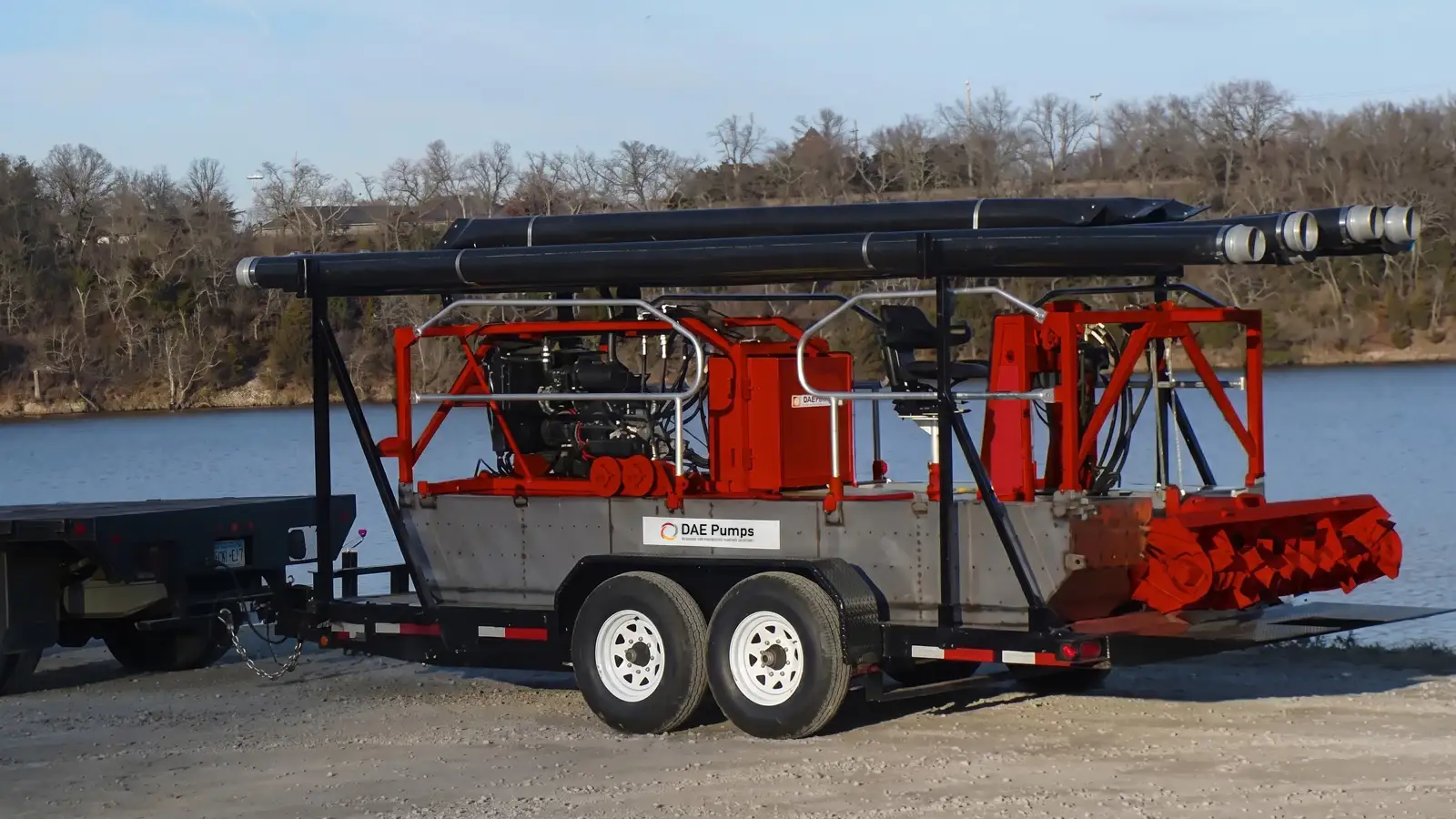
Compact 2-man operation
A lightweight, easy-to-operate design lets a two-person crew launch, run, and load the dredge safely — no heavy equipment or large crew required.

Non-clogging 6″ submersible pump
An abrasion-resistant, non-clogging 6-inch submersible slurry pump moves up to 1,500 GPM and passes softball-sized debris.
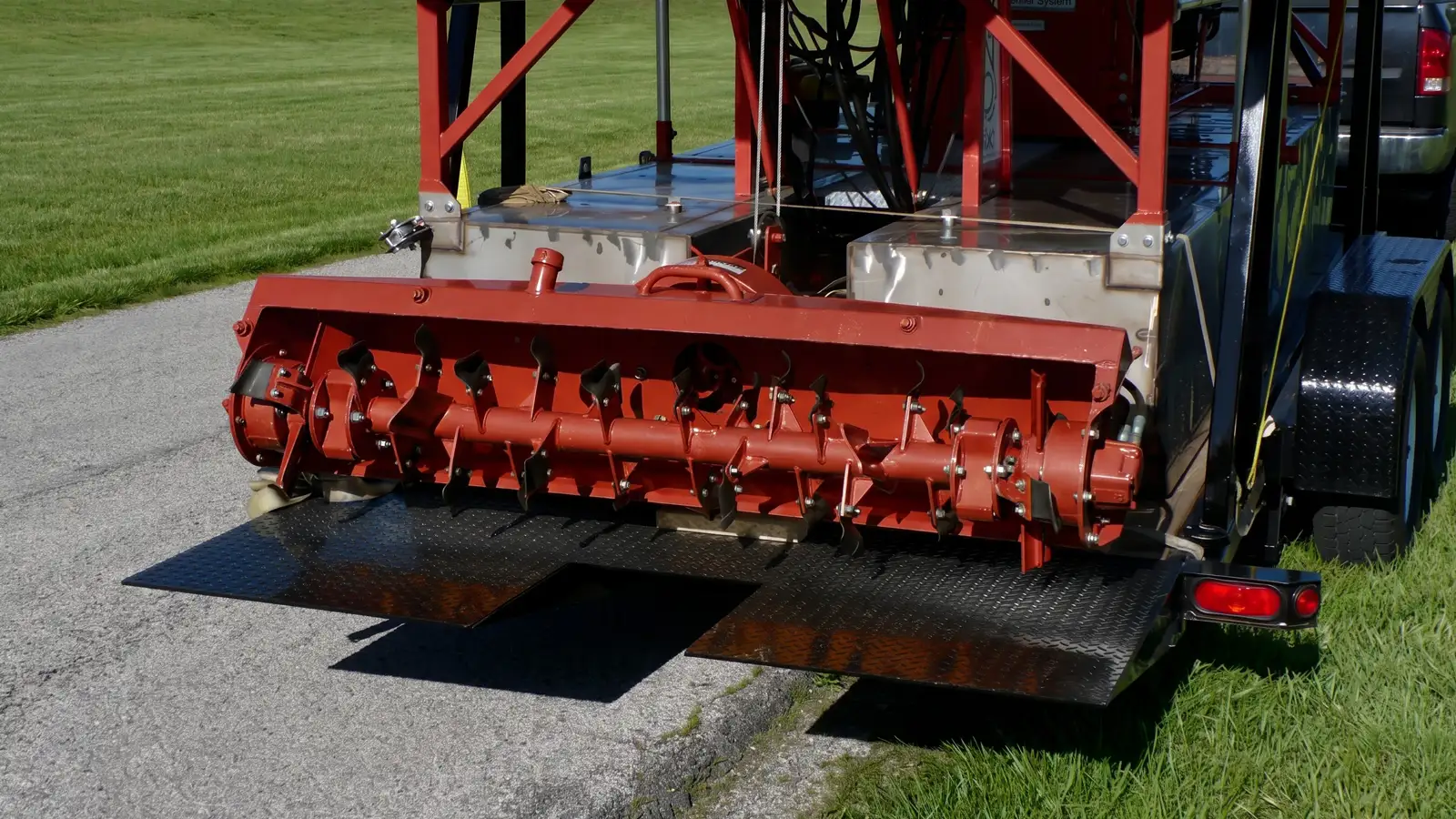
Extra-wide cutter head
A 66″-wide cutter head with excavator-grade teeth and a high-torque direct drive breaks up and dislodges compacted sediment fast.

Heavy-duty pontoons
Two multi-compartment pontoons and a secured platform provide a stable, safe work vessel in confined and shallow water.
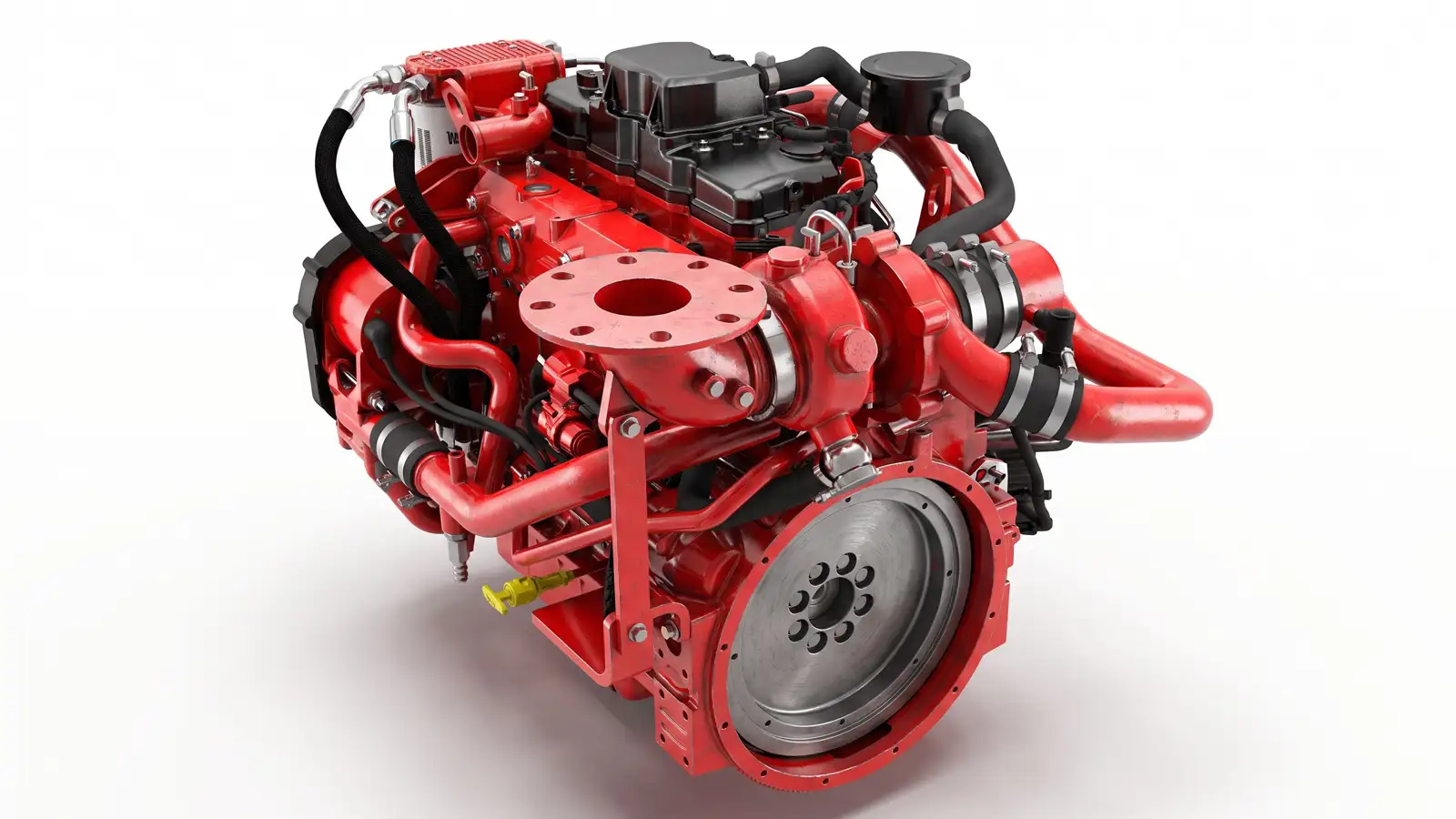
Cummins diesel power
A fuel-efficient 65 HP Cummins 4-cylinder diesel runs up to 10 hours on a 30-gallon tank at about 3 GPH.
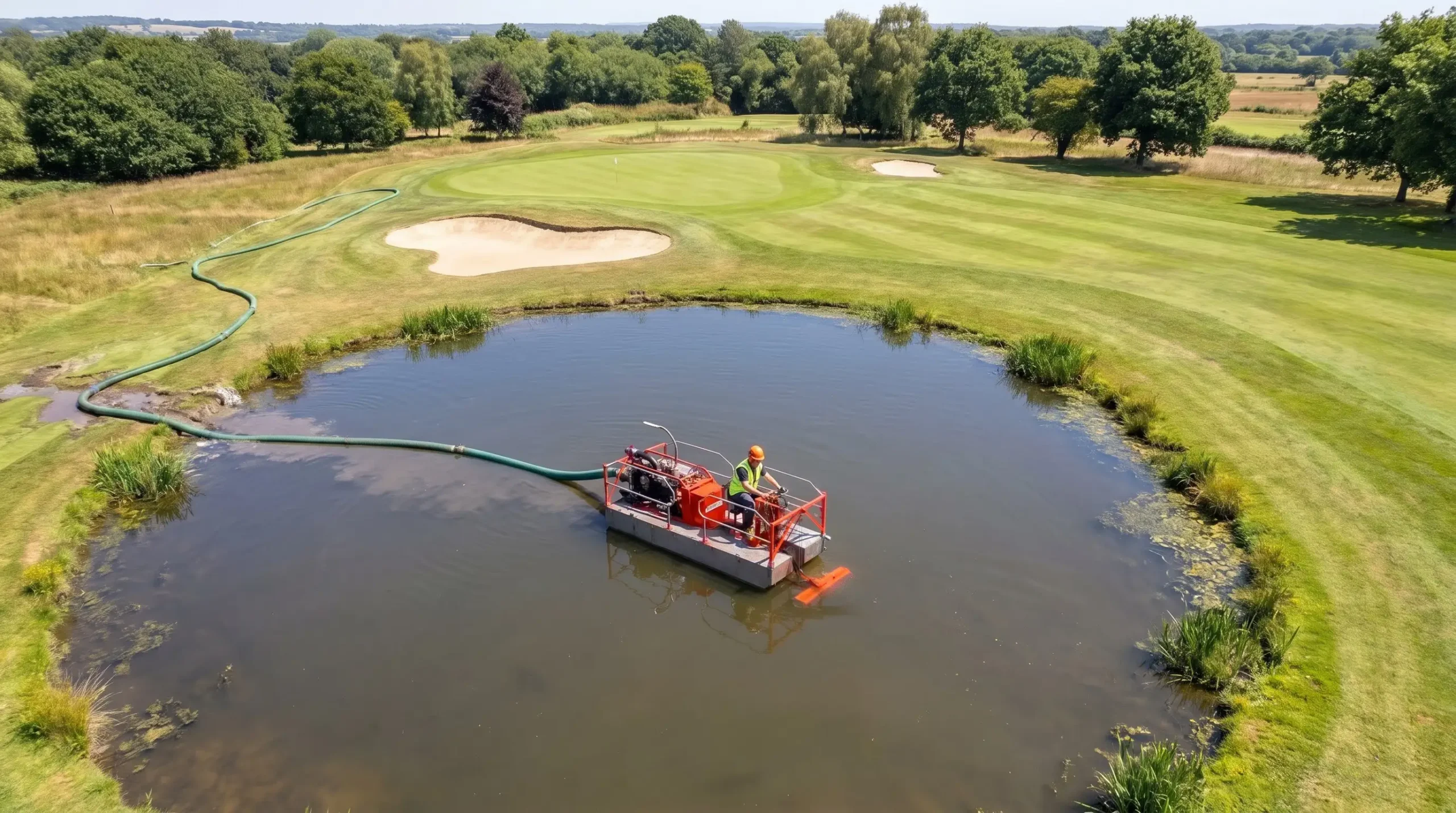
Small environmental footprint
The dredge sled design and shoreline-friendly launch remove material efficiently while protecting the site and banks.
How the Sediment Slayer Pond Dredge Works
Hydraulic pond dredging with the Sediment Slayer happens in three continuous steps — cut, pump, and discharge — while the dredge floats on the pond.

Cut and agitate
The 66″ cutter head with excavator-grade teeth breaks up compacted sediment, sludge, and aquatic weeds and pulls them toward the suction.

Suction and pump
The non-clogging 6″ submersible slurry pump draws in the loosened material and moves it as slurry at up to 1,500 GPM, passing softball-sized solids.

Discharge and dewater
Slurry travels through the floating discharge line to a geotextile tube, settling basin, or dewatering area for separation, disposal, or reuse.
Hydraulic vs Mechanical Pond Dredging
Most industrial ponds are cleaned by one of two methods. The Sediment Slayer is a hydraulic dredge, which suits ongoing sediment removal without draining the water body.
| Dredging Method | How It Works | Best For |
|---|---|---|
| Hydraulic dredging | A cutter head loosens sediment, and a submersible slurry pump moves it as a continuous slurry through a pipeline — the method the Sediment Slayer uses. | Ongoing pond and lagoon maintenance, removing soft-to-medium sediment without draining the water body. |
| Mechanical dredging | Buckets, clamshells, or excavators physically scoop sediment out of the water for haul-away. | Very hard, debris-heavy material or projects where the pond is drained first. |
Where the Sediment Slayer Pond Dredge Is Used
The Sediment Slayer handles sediment, sludge, and debris across recreational, agricultural, municipal, and industrial water bodies.

Golf Course & HOA Ponds
Restore depth and water quality in golf-course, community, and amenity ponds without heavy equipment or draining.
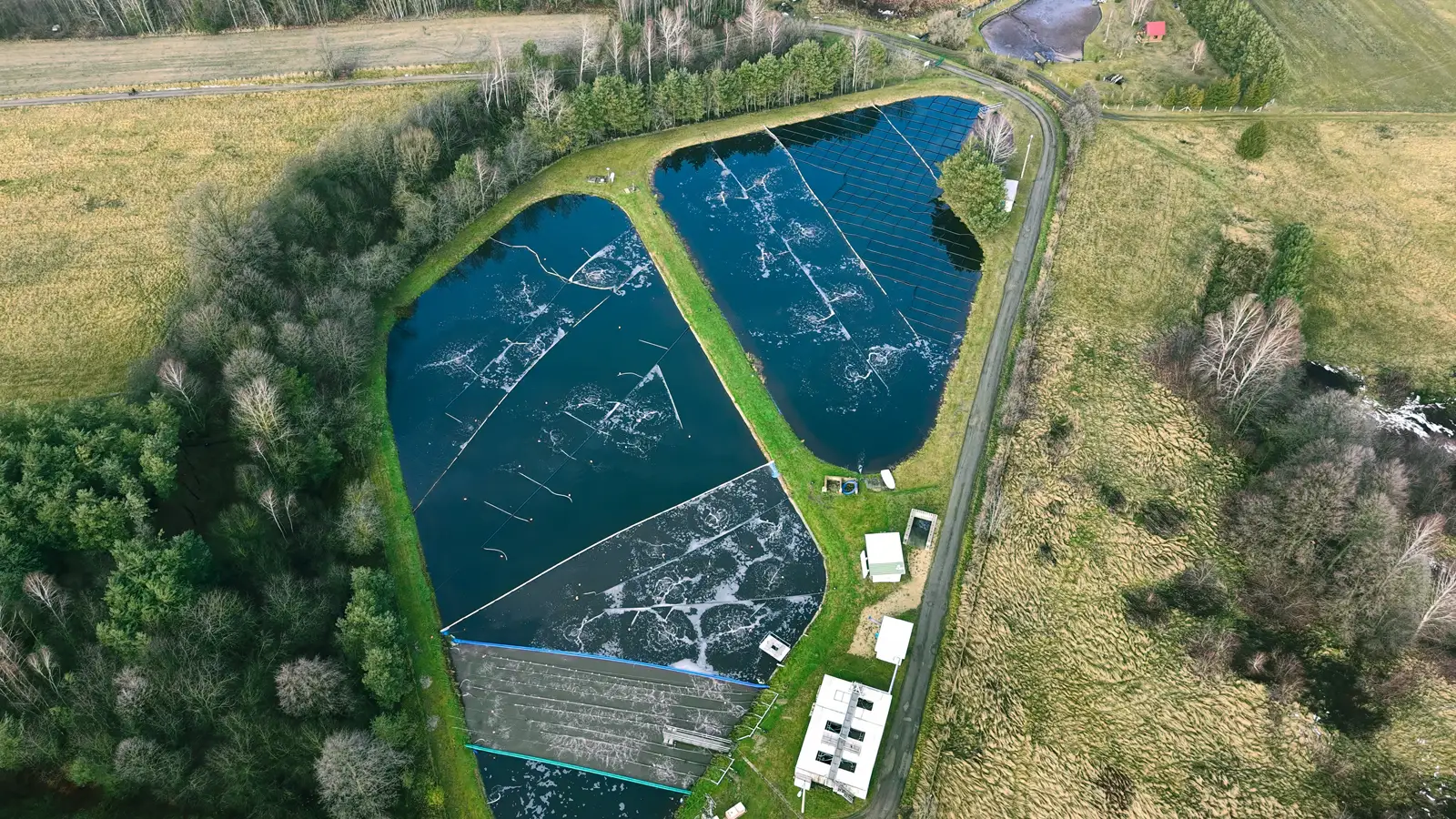
Lagoons & Lakes
Remove sludge and sediment from lagoons, lakes, and marinas to protect capacity and navigability.

Mine Tailings & Ash Ponds
Dredge tailings storage and energy ash ponds where consistent sediment removal keeps facilities compliant.

Farm & Irrigation Ponds
Clear silt and muck from farm ponds, irrigation canals, and basins to maintain storage and flow.

Municipal & Wastewater Basins
Handle sewage lagoons, settling tanks, and digester basins in municipal and industrial water treatment.

Paper, Pulp & Industrial Ponds
Remove process sediment from paper and pulp basins, land-reclamation sites, and other industrial ponds.
Sediment Slayer Packages and Options
The Sediment Slayer ships with standard discharge and travel packages and can be configured with options for depth, difficult materials, dewatering, and saltwater.
Standard Floating Discharge Package
- ≈ 220′ of discharge on the water
- 6″ SBR 150 psi discharge hose sections
- 6″ HDPE pipe with pipe floats
- 45° and 90° adapters
- Stainless locking eccentric clamps
Standard Travel Package
- 1000 ft of ¼″ galvanized aircraft cable
- Nylon slings, shackles & wire-rope thimbles
- Ground stakes and stake plates
- Two cable pullers (come-alongs)
- Crosby clips for rigging
Custom Trailer with Pipe Rack
- Dredge + discharge pipe travel as one load
- Removable pipe rack — no tools needed
- Winch-assisted loading and unloading
- Spare-tire mount included
- Shoreline-friendly launch and retrieval
Additional Options
| Option | What It Adds |
|---|---|
| Boom extender | 36″ extension that increases cut depth by 2 ft (to ≈ 15 ft). Factory-installed or conversion kit. |
| Cutter-head wheels | Adapt the dredge for use in lined lagoons without damaging the liner. |
| Paddle bar | Handles thicker, more viscous material such as sludge and muck. |
| Polymer mixing boxes | Inject polymer mid-discharge for dewatering, with optional automatic pressure-sensing injector control (PSIC). |
| Manifold components | Discharge into two geotextile tubes; additional tubes need added discharge components. |
| Impeller options | Closed impeller optimized for sludge/slurry with minimal trash or vegetation. |
| Saltwater package | Anodes plus stainless fittings and hose kit for saltwater dredging operations. |
| Bimini top & custom color | Operator sun protection, with custom dredge coloring available at no additional charge. |
Turnkey Accessories for Your Pond Dredge
DAE Pumps supplies complete turnkey dredging systems: dredge hoses, HDPE dredge pipe & floats, ultrasonic flow meters, hydraulic power units, generators, slurry separators, and geotextile dewatering tubes. Parts are stocked for immediate shipping across the US and worldwide.
Sediment Slayer Maintenance
Regular maintenance keeps the Sediment Slayer running reliably in abrasive, high-solids conditions. Wear-resistant components and a design engineered for quick replacement of wear parts and seals reduce downtime and keep operating costs in check.
Inspect and verify the impeller, seals, cutter-head drive, and hydraulic pressure systems on a regular schedule, and replace worn parts before they cause a failure. DAE Pumps supplies spare parts, wear parts, and expert technical support, with parts stocked for fast shipping across the US and worldwide.
What to Send DAE Pumps for Your Pond Dredging Project
To help DAE Pumps scope the right Sediment Slayer configuration and turnkey system, send the following project information:
Water body type and use
Pond, lagoon, lake, marina, golf-course pond, tailings/ash pond, or irrigation canal.
Approximate surface area and depth
Water area plus the maximum water depth at the work site.
Sediment type and solids
Silt, mud, sludge, sand, muck, aquatic weeds, or debris — and how compacted it is.
Volume to remove and timeline
Estimated cubic yards of material and your target project schedule.
Required dredging depth
Standard reach is up to 13 ft; a boom extender adds about 2 ft.
Discharge distance and destination
Dewatering area, geotextile tube, settling basin, or disposal/reuse site.
Shoreline access and launch
Trailer access, launch point, and any shoreline or liner constraints.
Water type
Fresh, salt, or brackish — for anode and stainless-fitting requirements.
Dewatering and polymer needs
Whether polymer injection, dewatering, or slurry separation is required.
Accessories and options
Floating discharge, HDPE pipe, floats, flow meter, power unit, or paddle bar.
New, rental, or turnkey
Whether you want to buy, rent, or receive a complete turnkey package, plus delivery location.
Sediment Slayer Pond Dredge FAQs
What is the Sediment Slayer Pond Dredge?
The Sediment Slayer is a compact, two-man pontoon dredge built to remove sediment, sludge, aquatic weeds, and debris from ponds, lakes, lagoons, and other water bodies. It pairs a 66″ cutter head with a non-clogging 6″ submersible slurry pump that moves material at up to 1,500 GPM.
What is industrial pond sediment removal?
Industrial pond sediment removal is the process of dredging accumulated silt, sludge, and solids from ponds, lagoons, and basins to restore capacity, water quality, and flow. Hydraulic dredges like the Sediment Slayer do this by pumping sediment out as a slurry, usually without draining the water body.
How is pond sediment removed with the Sediment Slayer?
The cutter head loosens compacted sediment, the 6″ submersible slurry pump draws it in and pumps it as slurry through a floating discharge line, and the material is sent to a geotextile tube, settling basin, or dewatering area for disposal or reuse.
What is the difference between hydraulic and mechanical dredging?
Hydraulic dredging loosens sediment and pumps it out as a continuous slurry through a pipeline—what the Sediment Slayer does. Mechanical dredging physically scoops material out with buckets or excavators. Hydraulic dredging suits ongoing pond maintenance without draining the water.
Can pond dredging happen without draining the pond?
Yes. The Sediment Slayer dredges while the pond stays full, floating on its pontoons and removing sediment from below the surface, so normal use of the water body is minimally disrupted.
How deep can the Sediment Slayer dredge?
Standard dredging depth is up to 13 feet. An optional 36″ boom extender increases the cut depth by about 2 feet, to roughly 15 feet.
What size solids and flow can it handle?
The non-clogging 6″ submersible slurry pump moves material at up to 1,500 GPM (1,100 GPM at 50 ft total dynamic head) and can pass softball-sized debris.
What industries and sites is it used for?
Common uses include golf-course and HOA ponds, lakes and marinas, mine tailings and energy ash ponds, farm and irrigation ponds, municipal sewage lagoons, paper and pulp basins, and land-reclamation projects.
How is the dredged sediment disposed of or dewatered?
Dredged slurry is commonly pumped into geotextile tubes or settling areas that separate water from solids. The dewatered material can then be hauled to a landfill or, where permitted, reused, for example, as land application.
Is the Sediment Slayer portable?
Yes. It loads onto a small trailer and launches without damaging the shoreline or leaving tracks, so a two-person crew can move it between sites, unload, and start dredging the same day.
What maintenance does the dredge need?
Follow a regular schedule: inspect the impeller, seals, cutter-head drive, and hydraulic pressure systems, and replace wear parts early. Wear-resistant components reduce how often service is needed, and DAE Pumps supplies spare parts and technical support.
How much does industrial pond dredging cost?
Cost depends on pond size and depth, sediment type and volume, discharge distance, dewatering needs, and timeline. Share your project details with DAE Pumps for pricing on the dredge and a turnkey package.
Can the Sediment Slayer dredge lined ponds without damaging the liner?
Yes. The optional cutter-head wheels adapt the Sediment Slayer for use in lined lagoons without damaging the liner. Request a quote to add them to your configuration.
Explore More DAE Pumps Dredging Equipment
Need a different configuration? See the full Pontoon Dredge Pumps range, Dredge Pumps, and Submersible Slurry Pumps — plus excavator-mounted and cable-deployed dredge systems for larger projects.
We're Here to Help
For help selecting the right Horton mobile generator for your site, call us or request a quote today.
