


Industrial Rotary Vane Pumps: High-Volume Non-Corrosive Fluid Transfer
Vane pumps are a type of rugged positive displacement pump (frequently made with a ductile iron casing) that uses blades, known as vanes, that slide in and out of rotor slots to move fluids. The action creates a suction that pumps fluids, forming a better seal than many pumps (and preventing oil mist losses). The rotor sits close to the wall of the cam, creating a crescent-shaped cavity on the other side. The blades on the vane pump, which always maintain contact with the cam wall, turn with the rotor. As the rotor spins, the vanes slide out when they reach the cavity, trapping fluid. As the vanes reach the end of the open space, they slide back in, and the trapped fluid then moves to the outlet or discharge valve. It is crucial to avoid dry running, as operating without fluid can cause irreversible damage, overheating, and motor burnout. Preventive measures like level sensors or dry running devices can detect the absence of fluid and shut the pump down to prevent damage.
DAE Pumps vane pumps combine low cost with high reliability, easy maintenance, and the best suction. Our rotary vane pumps are the finest at processing low viscosity liquids such as solvents, gasoline, LP gas (propane), ammonia, alcohol, fuel oils, and refrigerants. A rotary vane pump can also handle moderate viscosity liquids and comes in a variety of metals for these specific applications. DAE Pumps vane pumps are capable of up to 200,000 SSU and at temperatures between -25°F to 500°F. As fluid viscosity increases, the pumping speed and efficiency of these pumps decrease, necessitating adjustments to maintain effective operation and manage wear. Meanwhile, a sliding vane pump uses rigid vanes fitted into radial slots in a cylindrical rotor. The vanes travel outward under centrifugal force, maintaining close contact with the casing wall.

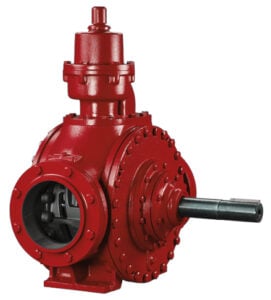
Vane Pumps
Mirasol Vane Pumps
The DAE Pumps Mirasol vane pumps are the industries most reliable vane pumps for high volume transferring of non-corrosive liquids. Mirasol vane pumps process a variety of liquids ranging in viscosity from thick molasses to thin solvents. The heavy-duty Mirasol pumps provide trouble-free operation with very little maintenance. Our wear-resistant pumps are capable of pumping fluids of up to 200,000 SSU and can reach a maximum capacity of 2,220 GPM at 350 RPM. Mirasol vane pumps can sustain short periods of dry running but should not be operated without fluid for extended times.
At DAE Pumps, we pride ourselves on the quality and performance of our pumps by providing complete solutions for all your liquid and slurry pumping needs. We offer slurry hoses for transferring materials, flow meters, hydraulic power units, and other accessories. All our parts are always in stock and available for immediate shipping to anywhere in the US and the world. Get the right rotary vane pump size and power for the job. Let us help you select the perfect vane pump for your next projects. Sliding vane pumps offer unique rotary vane technology that enables self-adjustment for wear, excellent self-priming capabilities, and high volumetric efficiency.
There are many types of positive displacement pumps that work best for a variety of different applications and uses. DAE Pumps provides multiple types and sizes of PD pumps. In addition to the industry’s best rotary vane pumps, we also sell affordable gear pumps, lobe pumps, screw pumps, piston pumps, plunger pumps, and diaphragm pumps. Check out all our positive displacement pumps.
DAE Pumps also manufactures a variety of centrifugal pumps: submersible slurry pumps, self-priming pumps, flooded suction pumps, and heavy-duty dredge pumps. Contact a DAE Pumps support member to help you find the best pump for you.

Vane Pump Diagram
Rotary Vane Pump Applications
DAE Pumps rotary vane pumps apply to a variety of applications that include the following and many others:
- Aerosol and Propellants
- Aviation Service – Fuel Transfer, Deicing
- Auto Industry – Fuels, Lubes, Refrigeration Coolants
- Bulk Transfer of LPG and NH3
- LPG Cylinder Filling
- Alcohols
- Refrigeration – Freons, Ammonia, Freeze Drying
- Solvents
- Aqueous solutions
- Vacuum pumps for industrial research settings
Advantages of DAE Pumps Vane Pumps
- Unique vane pump design maintains consistent flow rates
- Allows for an extended dry run and continuous operation with non-lubricating liquids
- Sliding vane design provides sustained performance and trouble-free operation
- Easy maintenance without removing the pump from the piping system
- High suction lift abilities that exceed 25 feet
- Handles solids with ease
- Thick to thin fluid viscosities
- Highly efficient requiring less horsepower than other pumps
Key Benefits of Vane Pumps
1. Constant Flow and Efficiency
One of the primary advantages of vane pumps is their ability to deliver a constant flow regardless of the system pressure. Unlike other pump types that may experience flow fluctuations, rotary vane pumps maintain a steady output with each rotation, which is crucial in applications requiring precise fluid delivery speed. This constant flow characteristic makes vane pumps highly efficient and reliable in various industrial settings.
2. Versatility in Applications
Vane pumps are incredibly versatile, capable of handling a wide range of fluids, including those with varying viscosities. This adaptability makes them suitable for numerous industrial applications, from automotive lubrication systems to chemical processing. Their ability to handle different liquid types, including corrosive and abrasive materials, further underscores their flexibility.
3. Compact Design and Ease of Maintenance
The design of rotary vane pumps is relatively simple, manufactured with fewer moving parts when compared to gear pumps. This simplicity translates into a more compact design, making vane pumps ideal for installations where space is a premium. Additionally, the reduced number of components means less wear and tear, resulting in lower maintenance requirements and costs.
Sliding vane pumps operate through a rotor with sliding vanes that self-adjust for wear, providing excellent self-priming capabilities and high volumetric efficiency.
Effective cooling and lubrication are crucial for the longevity and performance of vane pumps. As the fluid is drawn into the pump (often in compressed form), it provides necessary cooling to the internal components, including the rotors. Lubrication of the vanes and rotor reduces friction and wear, ensuring smooth operation. This self-lubricating action is particularly beneficial in maintaining the integrity of the pump during self-priming and continuous operation.
4. Two-Stage Pumping for Enhanced Performance
Many vane pumps are designed as two-stage pumps, enhancing their speed and performance by allowing for higher pressure and improved efficiency. In a two-stage rotary vane pump, the fluid undergoes two distinct pumping phases, which helps achieve greater compression and smoother operation. This feature is particularly beneficial in applications requiring high-pressure delivery.
5. Self-Priming Capability
Vane pumps possess excellent self-priming capabilities, enabling them to use centrifugal force to remove air from the lines and start pumping without the need for manual priming. This self-priming feature ensures quicker start-ups and reduces downtime, which is crucial in continuous industrial operations.
Vane pumps are capable of handling fluids with suspended solids and other contaminants. The robust design ensures that even if some solids enter the pumping chamber, they do not impede the self-priming process. Proper lubrication of the vanes and the smooth internal surfaces of the housing wall help in reducing wear and maintaining efficiency.
Vane pumps are highly adaptable to varying load conditions. Their design allows for efficient operation even with changes in the fluid level or pressure within the supply vessel. The ability to self-prime ensures that the pump can handle intermittent or continuous duty cycles without performance degradation.
6. Reduced Noise and Vibration
Compared to other positive displacement pumps, such as gear pumps, vane pumps operate with significantly less noise and vibration. The smooth, continuous motion of the vanes within the cylindrical housing minimizes pulsations, leading to quieter and more stable pump operation. This characteristic is particularly important in environments where noise reduction is a priority.
How Vane Pumps Operate
1. The Role of the Slotted Rotor and Vanes
At the heart of a vane pump is a slotted rotor that rotates inside a cylindrical housing. As the rotor turns, centrifugal force pushes the vanes out from the rotor’s slots, ensuring they stay in contact with the inner surface of the housing. This creates tight seals along the edges of the vanes, forming discrete pumping chambers.
2. Fluid Intake and Compression
As the rotor spins, the volume of the pumping chamber varies. When a chamber is at the point of maximum volume, it is exposed to the pump’s inlet. Fluid enters the chamber due to the low pressure created by the increasing volume. As the rotor continues to turn, the chamber decreases in size, compressing the fluid.
3. Fluid Displacement
The compressed fluid is then pushed towards the outlet as the chamber size diminishes further. This displacement mechanism ensures that a fixed volume of fluid is moved during each rotation of the rotor, resulting in a constant flow of fluid through the pump.
Two-Stage Vane Pumps
In certain applications, two-stage rotary vane pumps are employed to enhance performance. These pumps feature two distinct pumping stages within a single unit, allowing for higher pressures and improved efficiency. The fluid undergoes two separate compression phases, which helps achieve greater overall compression and smoother operation. This design is particularly beneficial in applications requiring high-pressure delivery and precise fluid control.
Comparison with Gear Pumps
Gear pumps, another type of displacement pump, operate using interlocking gears to move fluid. While effective, gear pumps tend to produce more noise and vibration compared to vane pumps. Additionally, gear pumps may not handle varying fluid viscosities as well as vane pumps. The sliding vanes of vane pumps adapt more easily to different fluid properties, making them more versatile in various industrial settings.
Components of Vane Pumps
Vane pumps, specifically rotary vane pumps, are comprised of several key components:
- Slotted Rotor: The central rotating element of the pump.
- Cylindrical Housing: The chamber within which the rotor spins.
- Vanes: Blades that slide in and out of the rotor’s slots.
- Pumping Chamber: The area where fluid is trapped and moved through the pump.
Contact Us Today
Please contact our sales team for product questions or if you need help selecting the best dredge or pump system for your application.
Phone: (760) 821-8112
Email: [email protected]
Live chat: Click to chat
Business Hours: 7:30a-5:30p Monday-Friday