
SLURRY PUMPS
Submersible Slurry Pumps
Heavy-duty submersible slurry pumps built to move abrasive sand, sludge, and high-solids slurry — with flows up to 2,112 GPM and as much as 102 HP.
DAE Pumps electric submersible slurry pumps handle the toughest abrasive media in dredging, mining, quarrying, and dewatering work. Non-clogging hydraulics, high-chrome impellers, and a high-efficiency agitator keep solids moving in 3-, 4-, 6-, and 8-inch discharge sizes.
- Flows up to 2,112 GPM and up to 102 HP across the range
- 3″, 4″, 6″, and 8″ discharge sizes — Tampa and Lansing series
- High-chrome agitator lifts settled solids up to 2.5″
- Double silicon-carbide mechanical seal and heavy-duty bearings
- Non-clogging, large-aperture design for high-solids slurry
Need help now? Call (760) 821-8112
8,800 GPM
MAX FLOW ACROSS RANGE
102 HP
MAX POWER OUTPUT
2.5″
SETTLED SOLIDS LIFTED BY AGITATOR
16
MODELS — 3″ TO 8″
What Is a Submersible Slurry Pump?
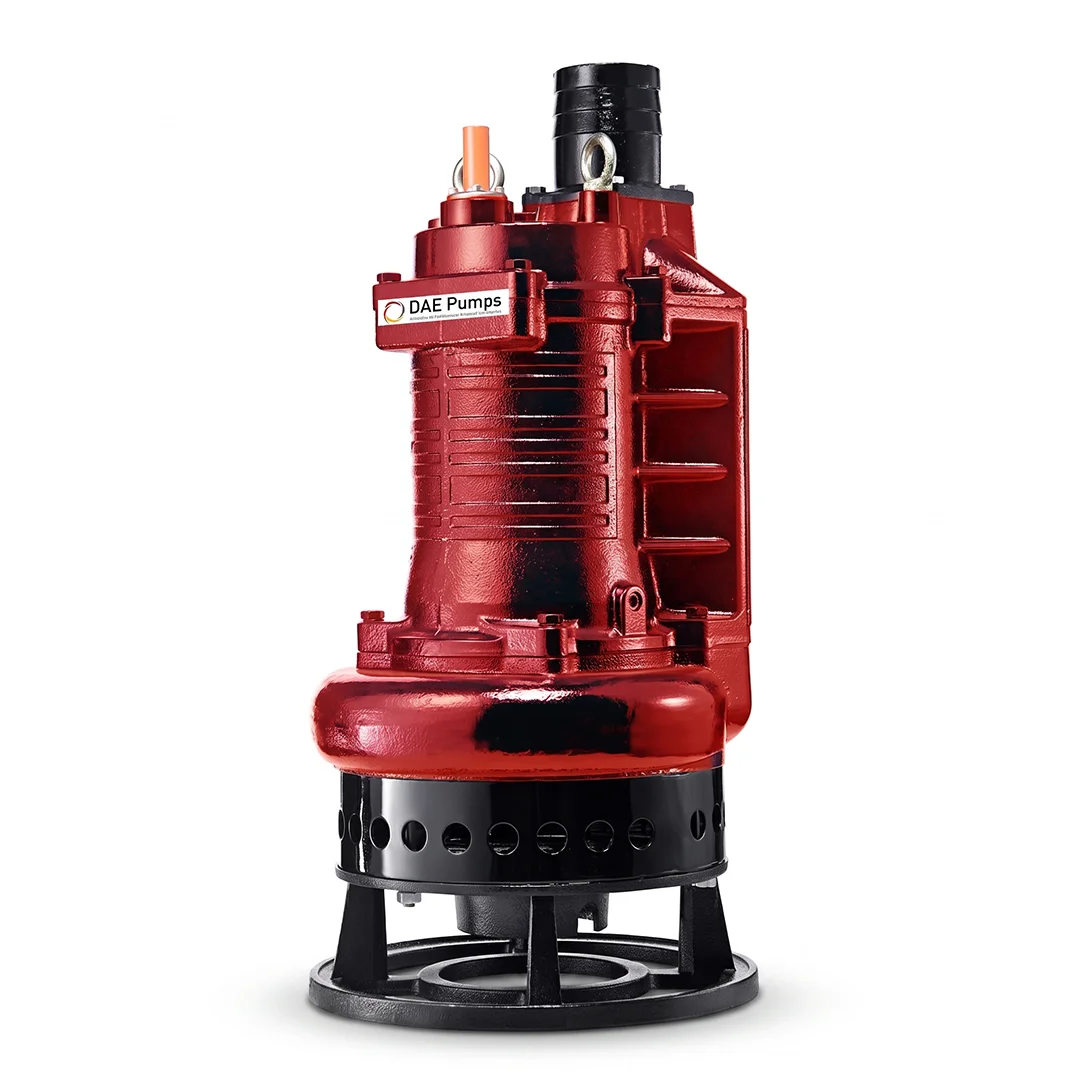
A submersible slurry pump is a heavy-duty pump that runs fully submerged in the abrasive mixture it moves. DAE Pumps submersible slurry pumps combine a sealed electric motor, a hardened high-chrome impeller, and a high-efficiency agitator in one rugged unit to pump sand, sludge, and high-solids slurry that standard water pumps cannot handle. The range moves up to 2,112 GPM with as much as 102 HP, in 3-, 4-, 6-, and 8-inch discharge sizes across the Tampa and Lansing series.
Non-clogging hydraulics and the largest apertures in their class let these pumps pass the most challenging solids, while the high-chrome agitator lifts settled solids up to 2.5″ to keep heavy material in suspension. A modular design, adjustable wear-resistant diffuser, and double silicon-carbide mechanical seal make them easy to service on site and dependable in continuous, abrasive duty.
Submersible Slurry Pump Models and Specifications
Compare every DAE Pumps submersible slurry pump by discharge size, power, maximum volume, head, and solids handling. Final selection should be based on your flow, head, solids size, abrasiveness, and available power — use the sizing guide below or contact DAE Pumps for help.
| Model | Discharge Size | Power | Max Volume | Max Head | Solids Handling |
|---|---|---|---|---|---|
| Tampa 337 | 3″ | 5 HP | 343 GPM | 49′ | 1″ |
| Tampa 355 | 3″ | 7.5 HP | 449 GPM | 69′ | 1″ |
| Tampa 437 | 4″ | 5 HP | 476 GPM | 46′ | 1″ |
| Lansing 340 | 3″ | 5.5 HP | 435 GPM | 45′ | 1.15″ |
| Tampa 455 | 4″ | 7.5 HP | 594 GPM | 57′ | 1″ |
| Lansing 460 | 4″ | 8 HP | 635 GPM | 55′ | 1.15″ |
| Tampa 475 | 4″ | 10 HP | 655 GPM | 61′ | 1″ |
| Lansing 690 | 6″ | 12 HP | 845 GPM | 70′ | 1.15″ |
| Tampa 4110 | 4″ | 15 HP | 819 GPM | 85′ | 1″ |
| Tampa 6110 | 6″ | 15 HP | 977 GPM | 72′ | 1.4″ |
| Tampa 6150 | 6″ | 20 HP | 1,136 GPM | 100′ | 1.4″ |
| Tampa 6150-L | 6″ | 20 HP | 1,453 GPM | 75′ | 1.4″ |
| Lansing 8150 | 8″ | 20 HP | 1,600 GPM | 72′ | 1.15″ |
| Tampa 6220 | 6″ | 30 HP | 1,268 GPM | 105′ | 1.2″ |
| Tampa 8220 | 8″ | 30 HP | 1,664 GPM | 79′ | 1.4″ |
| Lansing 8220 | 8″ | 30 HP | 1,575 GPM | 100′ | 1.15″ |
Volume and head are maximums based on model testing; effective performance is lower when pumping heavy, high-solids slurry. Confirm final specs with a DAE Pumps representative.
How to Choose a Submersible Slurry Pump
Start with the material you need to move, then match the pump to flow, head, solids, abrasiveness, discharge size, and power. This helps you self-qualify a model before requesting pricing.
| Selection Factor | What to Know | Why It Matters |
|---|---|---|
| Volume (GPM) | Estimate the flow you need to move, remembering slurry is 15–30% solids and the rest water. | Sets the baseline pump size and discharge diameter. |
| Total head | Add vertical lift plus friction loss over the hose or pipe run. | Slurry weighs more than water, so effective head is lower than the water rating. |
| Solids size & type | Identify the largest particle and whether the media is sand, sludge, gravel, or tailings. | Determines minimum aperture and the right impeller/agitator setup. |
| Abrasiveness | Gauge how aggressive and gritty the slurry is. | Guides high-chrome impeller and wear-liner selection for pump life. |
| Discharge size | Match hose or pipe to the pump discharge — fittings can step down, not up. | Prevents restriction, settling, and clogging in the line. |
| Power & voltage | Confirm available electrical supply and required horsepower. | Ensures the motor can move the material the full distance without settling. |
| Application | Dredging, mining, quarry, dewatering, aggregate, wastewater, or tailings. | Narrows the model range and any accessories needed. |
Submersible Slurry Pump Applications
DAE Pumps submersible slurry pumps are engineered for abrasive, high-solids material handling across dredging, mining, aggregate, dewatering, and wastewater work.

Dredging
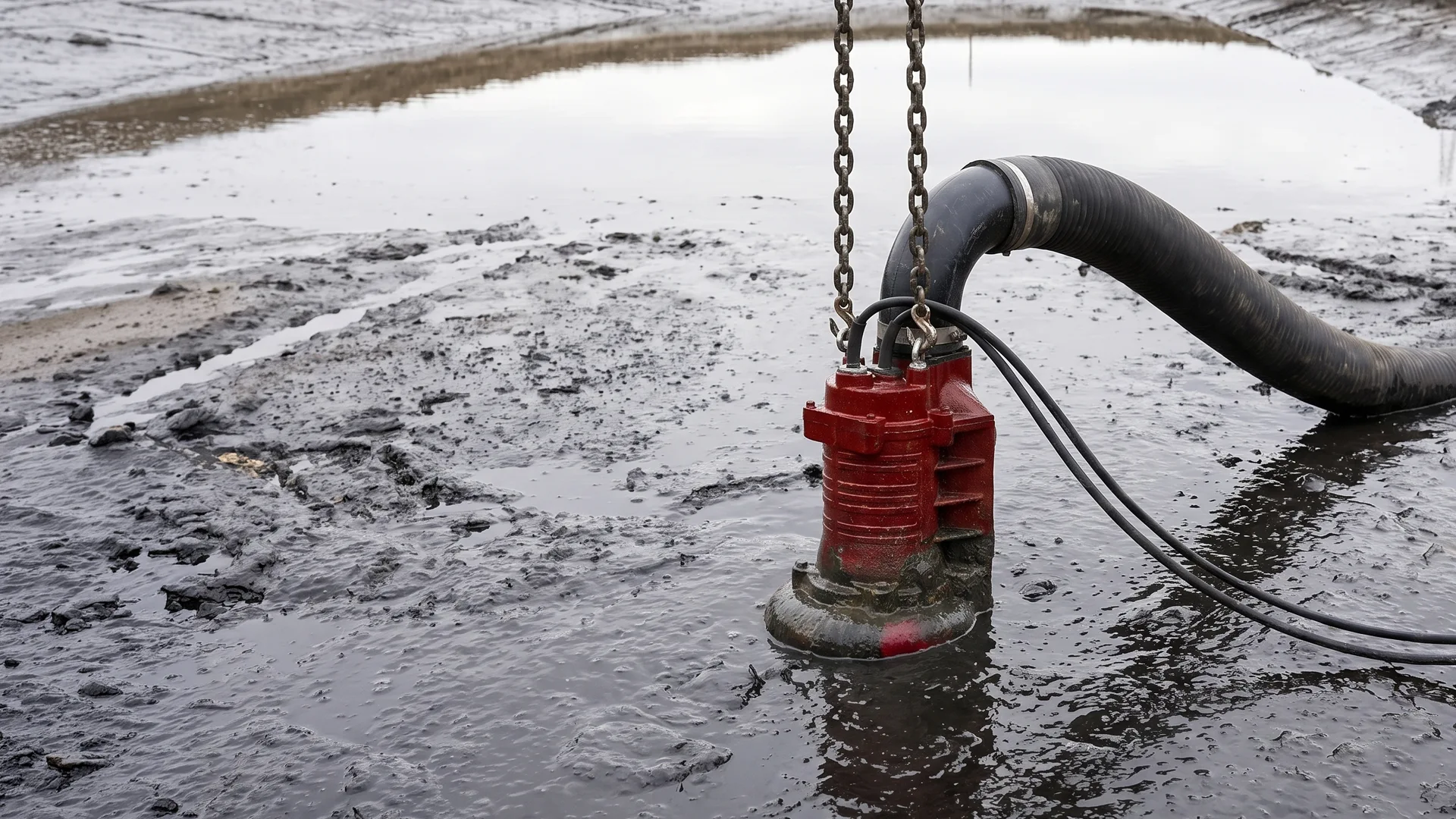
Move dredged sand, silt, and slurry from ponds, lakes, rivers, and marinas with non-clogging, high-solids hydraulics.

Mining & Tailings
Transfer abrasive mine slurry, process water, and tailings where high-chrome wear resistance is essential.

Sand & Gravel
Pump sand and gravel slurry in quarries and aggregate operations at high volume with minimal clogging.
Dewatering
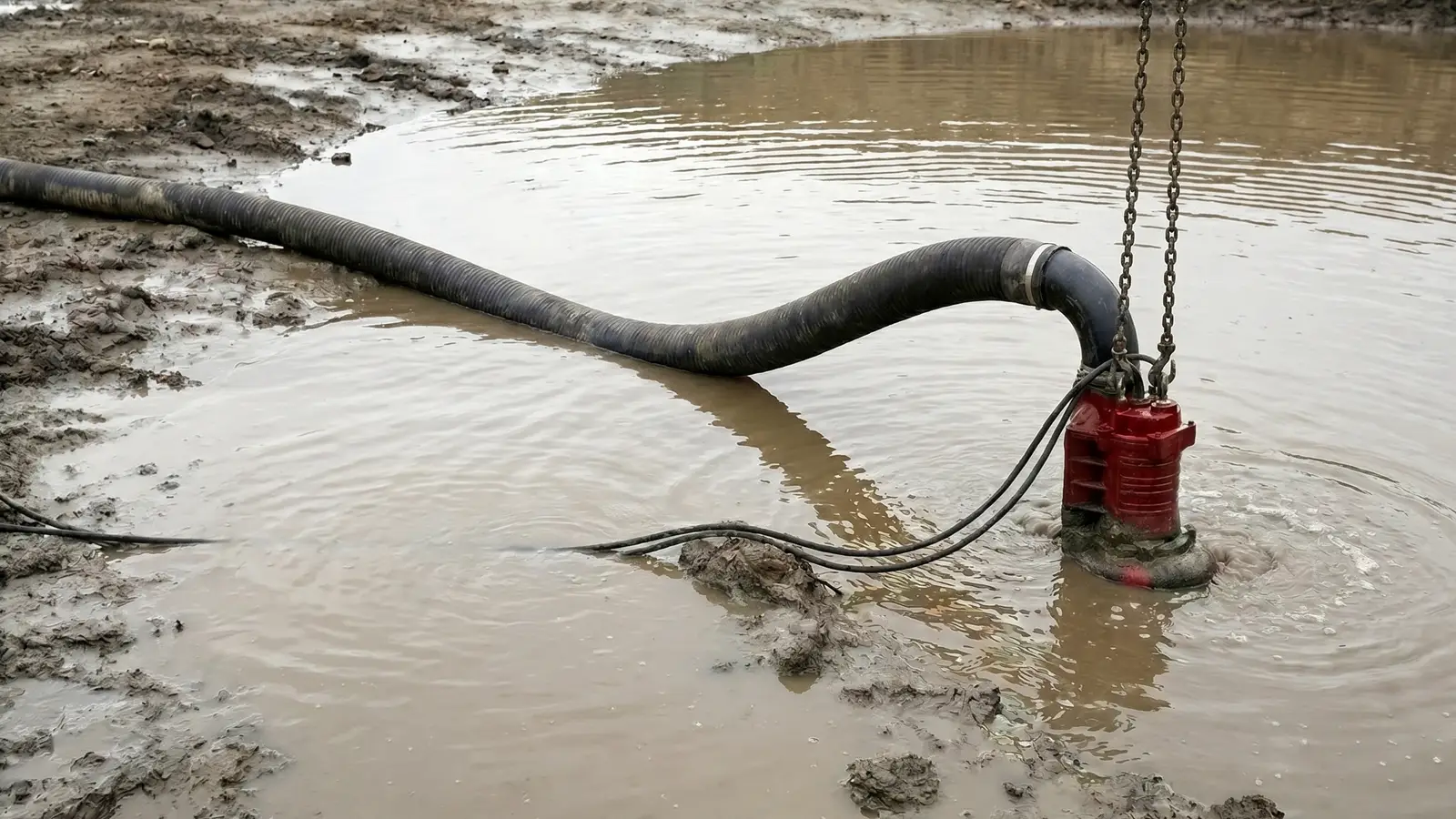
Remove water, sludge, and drainage from pits, trenches, sumps, and job sites for industrial dewatering.

Aggregate Processing
Handle wash slurry, fines, and process water in aggregate plants and material-handling systems.
Wastewater & Sludge
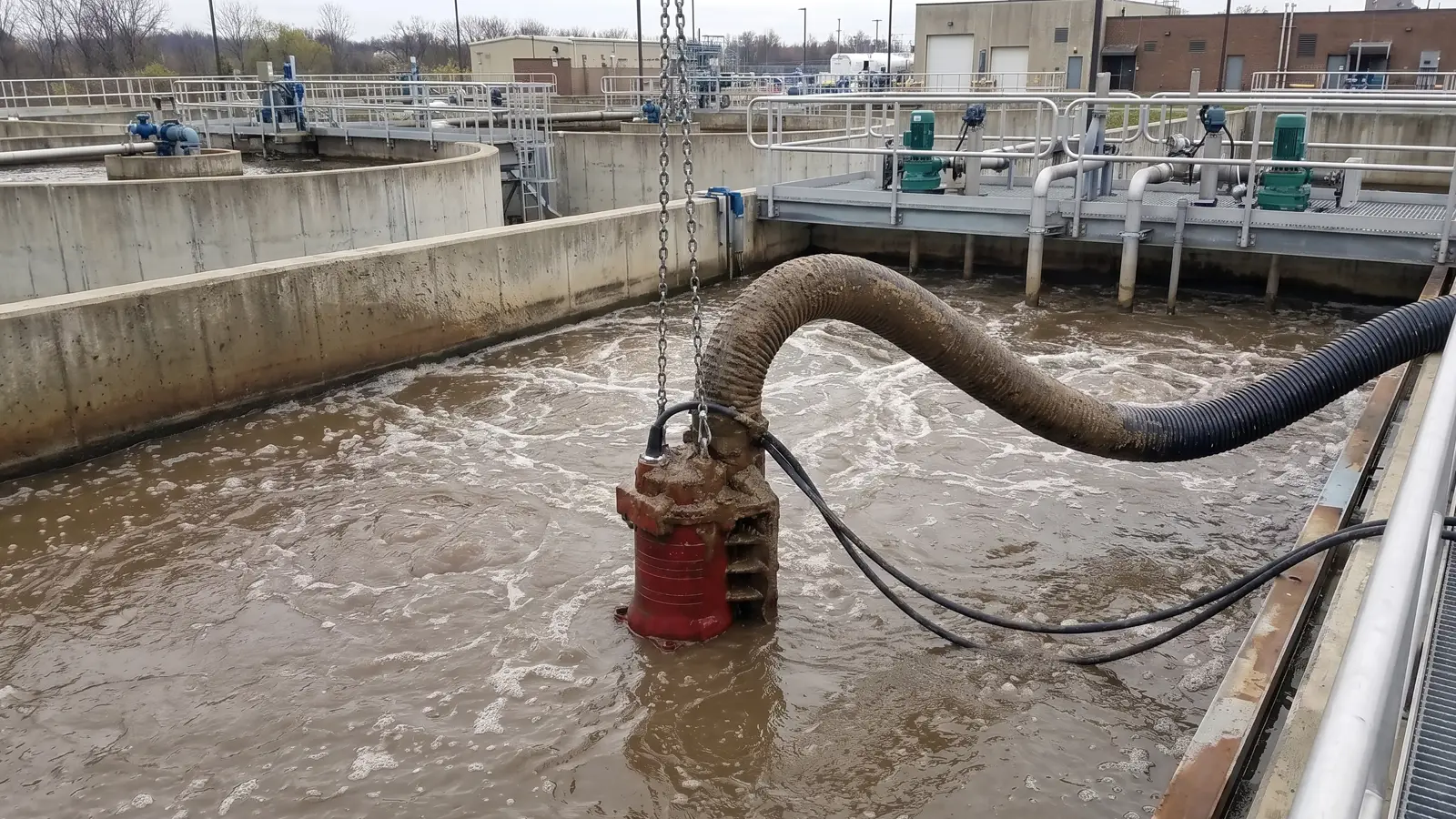
Transfer sludge and high-solids wastewater in municipal and industrial treatment operations.
Submersible Slurry Pump Features
Every DAE Pumps submersible slurry pump is built around abrasion-resistant components and a protected, easy-to-service design for the toughest slurry duty.

High-chrome impellers
Hardened high-chrome impellers resist abrasion for long life in gritty, high-solids slurry.

High-efficiency agitator
The high-chrome agitator lifts settled solids up to 2.5″ so material keeps moving instead of packing.

Double silicon-carbide seal
A reinforced double silicon-carbide mechanical seal protects the motor in continuous-duty applications.

Heavy-duty bearings
Robust bearings absorb shocks and overloads on the toughest dredging and mining sites.

Non-clogging, large aperture
The largest apertures in the class pass challenging solids without clogging or downtime.

Aluminum alloy build
A unique aluminum alloy balances strength, light weight, and corrosion resistance for easy handling.

Adjustable wear-resistant diffuser
A wear-resistant rubber diffuser can be adjusted to maintain efficiency as parts wear.

Motor protection system
Class H insulation with PTC and Clicson thermal protection, a built-in starter, and optional level control.
How a Submersible Slurry Pump Works
A submersible slurry pump does three things at once — draw in the mixture, keep solids suspended, and move the material under head to the discharge point.
Draw in the slurry
The pump is submerged directly in the slurry. Its large, non-clogging inlet draws in water, sand, and solids together.
Agitate & suspend solids
The high-chrome agitator stirs and lifts settled solids up to 2.5″, keeping heavy material in suspension so it can be pumped.
Move material under head
The high-chrome impeller drives the slurry through the discharge and up the head, transferring material to the discharge point.
Submersible Slurry Pump Sizing Guide
Slurry is typically 15–30% solids, so a pump moves far less solid material than its water GPM suggests. Because slurry weighs more than water, effective head is also lower than the water rating. Use the steps below to estimate how much material a pump can move and how long a job will take.
| Step | Equation | Worked Example |
|---|---|---|
| Material to cubic yards | Length (ft) × Width (ft) × Depth (ft) ÷ 27 | 50 × 50 × 2 ÷ 27 = 185 cubic yards |
| Cubic yards to gallons | Cubic yards × 201.974 | 185 × 201.974 = 37,365 gallons of material |
| Solids moved per minute | Pump GPM × 0.15 | 2112 × 0.15 = 316.8 Gallons of solids/min |
| Total minutes to pump | Gallons of material ÷ solids per minute | 37,365 ÷ 316 ≈ 118 minutes |
| Total hours to pump | Total minutes ÷ 60 | 118 ÷ 60 ≈ 2 hours |
Tampa and Lansing Model Lineup
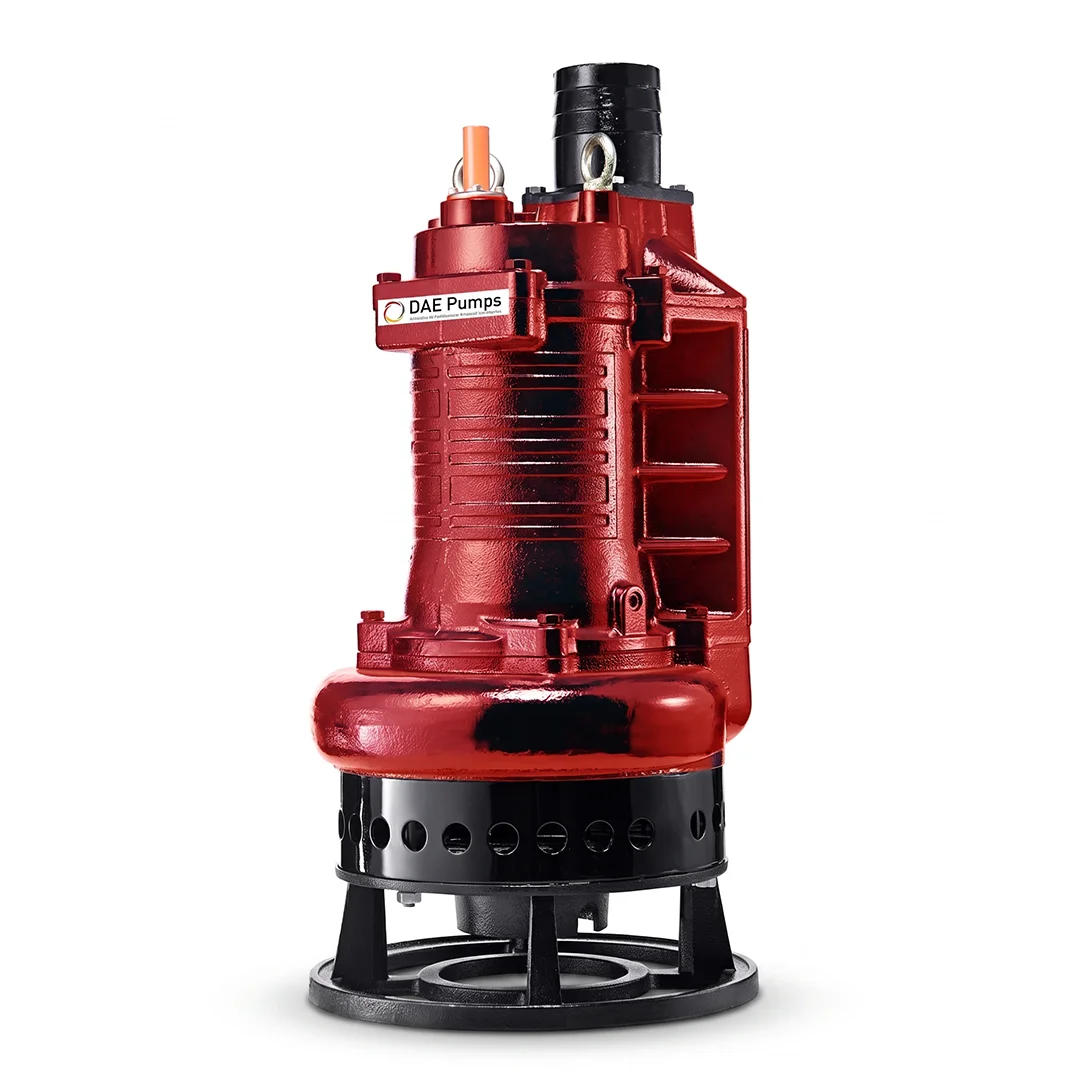
The complete Tampa and Lansing submersible slurry pump lineup — 3″ to 8″ discharge, from compact pond and dewatering units to high-volume dredging and mining pumps. Each model links to its product page and datasheet.




Explore More DAE Pumps Slurry & Dredge Equipment
Looking for a different configuration? See the full Slurry Pumps range, Dredge Pumps, and Submersible Pumps — plus slurry hoses, flow meters, hydraulic power units, and accessories for complete turnkey material-handling systems.

Submersible Slurry Pump Maintenance
Abrasive slurry accelerates wear, so regular maintenance is key to uptime and pump life. Wear-resistant materials, high-chrome impellers, and adjustable diffusers reduce how often parts need attention, and most models are engineered for quick replacement of wear parts and seals with minimal disruption.
Inspect the impeller, seals, and wear parts on a regular schedule and replace worn components early — catching wear before it becomes a failure keeps efficiency high and downtime low. DAE Pumps supplies spare parts, wear parts, and technical support, with parts in stock for fast shipping in the US and worldwide.
What to Send DAE Pumps for Slurry Pump Sizing
To size the right submersible slurry pump, send: the material and largest solids size · required flow (GPM) and total head or discharge distance · slurry abrasiveness and approximate solids percentage · discharge hose or pipe size · available power and voltage · application (dredging, mining, quarry, dewatering, aggregate, wastewater, or tailings) · site conditions and delivery timeline.
Submersible Slurry Pump FAQs
What is a submersible slurry pump?
A submersible slurry pump is a heavy-duty pump that operates fully submerged in the slurry it moves. It combines a sealed electric motor, a high-chrome impeller, and an agitator in one unit to pump abrasive mixtures of water, sand, sludge, and solids that standard water pumps cannot handle.
How does a submersible slurry pump work?
Submerged in the media, the pump draws slurry through a large non-clogging inlet. An agitator lifts settled solids into suspension, and a high-chrome impeller drives the mixture through the discharge and up the required head to the discharge point.
What is the difference between a slurry pump and a dredge pump?
A slurry pump is built to move abrasive, high-solids liquid mixtures. A dredge pump is a slurry pump configured specifically to excavate and transport bottom sediment in dredging work. DAE Pumps submersible slurry pumps are widely used for dredging as well as mining, quarry, and dewatering duty.
What solids can a submersible slurry pump handle?
DAE Pumps submersible slurry pumps pass solids from roughly 1″ to 1.4″ depending on model, while the high-chrome agitator lifts settled solids up to 2.5″. Typical media include sand, silt, gravel, mud, sludge, and abrasive process slurry.
How do I size a submersible slurry pump?
Match the pump to your required flow (GPM), total head, largest solids size, and slurry abrasiveness, then confirm discharge size and available power. Remember slurry is typically 15–30% solids, so effective volume and head are lower than the water rating. DAE Pumps can run a viscosity check to confirm selection.
What size discharge do these pumps offer?
DAE Pumps submersible slurry pumps are available in 3-inch, 4-inch, 6-inch, and 8-inch discharge sizes. Larger discharge generally allows higher volume and larger solids.
What causes slurry pump wear, and how is it reduced?
Wear comes from abrasive solids moving through the pump at speed. It is reduced with hardened high-chrome impellers, wear-resistant liners and diffusers, correct sizing, and regular inspection of impeller, seals, and wear parts.
What is a high-chrome impeller?
High-chrome is a hardened, abrasion-resistant alloy used for impellers and wear parts in slurry service. It resists the grinding action of sand and grit far better than standard materials, extending pump life in abrasive applications.
What motor and seal protection do the pumps include?
Motors use Class H insulation with PTC and Clicson thermal protection and a built-in starter, with optional automatic level control. A reinforced double silicon-carbide mechanical seal and high-quality cable sealing protect against water ingress in continuous duty.
What industries use submersible slurry pumps?
Common industries include dredging, mining and tailings, sand and gravel, aggregate processing, dewatering, wastewater and sludge handling, construction, and environmental remediation.
Can submersible slurry pumps run continuously?
Yes. They are built for continuous-duty operation with heavy-duty bearings, thermal-protected motors, and double mechanical seals. Following a regular maintenance schedule maximizes uptime and service life.
How often should a submersible slurry pump be serviced?
Service intervals depend on how abrasive the slurry is and how many hours the pump runs. Inspect the impeller, seals, and wear parts on a regular schedule and replace worn components early to avoid unplanned downtime.
Slurry pump vs. drainage/dewatering pump: when do I need which?
Drainage and dewatering pumps are designed for water with few, small solids, so they have less clearance between the impeller and volute. Slurry pumps are built for abrasive, high-solids mixtures like sand, silt, and sludge, with large apertures, high-chrome wear parts, and an agitator. Use a drainage pump to clear water; use a slurry pump when it carries grit or sludge.
We’re Here to Help
For help selecting the right submersible slurry pump for your dredging, mining, or dewatering project, call us or request a quote today.
