- What Makes Mining Slurry Difficult to Pump?
- Main Pump Types Used in Mining Slurry Applications
- Which Pump Works Best for Different Mining Applications?
- Key Factors That Determine Mining Slurry Pump Selection
- Common Problems Caused by Incorrect Slurry Pump Selection
- Horizontal vs Vertical vs Submersible Mining Slurry Pumps
- Choosing the Right Mining Slurry Pump for Long-Term Reliability
- Frequently Asked Questions
Mining slurry is one of the most difficult materials to transport in industrial pumping systems. Unlike clean water applications, mining slurry contains abrasive solids that continuously wear internal pump components while creating unstable flow conditions throughout the system. Particle size, solids concentration, slurry density, viscosity, and material composition all influence how a pump performs, how quickly components wear, and how reliably the system operates over time.
Standard water pumps often fail in mining slurry environments because they are not designed to handle abrasive particles or high-solids transport. Excessive impeller wear, clogging, seal failures, reduced efficiency, and frequent maintenance shutdowns are common when pumps are improperly matched to slurry conditions. In many mining operations, incorrect pump selection can increase downtime, shorten equipment life, raise power consumption, and reduce production efficiency across the entire transport system.
This creates one of the most common questions in mining operations: what pump works best for mining slurry? The answer depends on several operating factors including slurry composition, particle size, solids percentage, transport distance, pump location, production requirements, maintenance accessibility, and overall system design. Different mining conditions require different pump configurations to maintain reliable slurry transport while controlling wear and operating costs.
What Makes Mining Slurry Difficult to Pump?
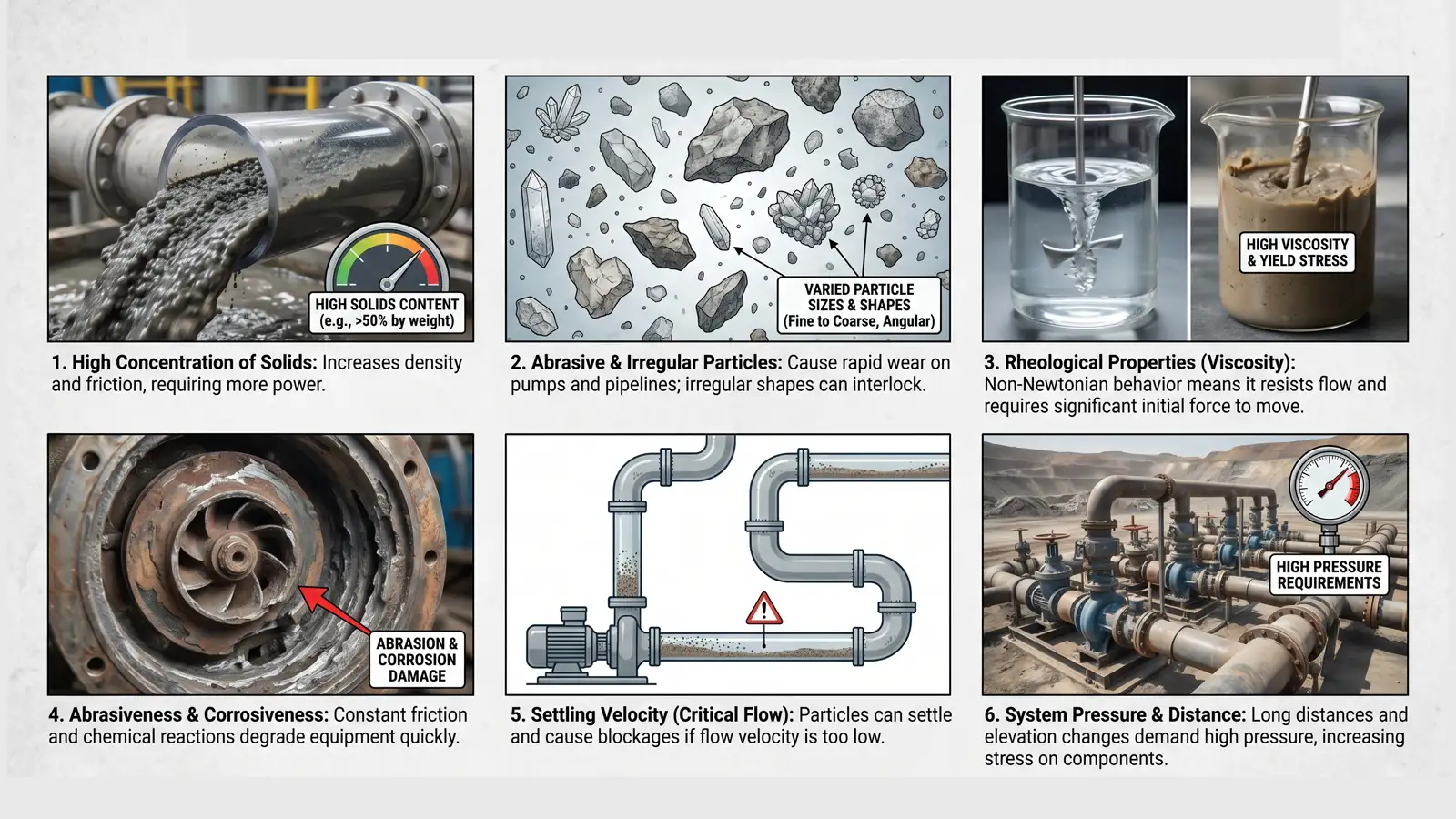
Mining slurry behaves very differently from water or light industrial fluids because it contains suspended solids that continuously affect flow behavior, hydraulic efficiency, and equipment wear. Slurry systems must move abrasive particles while maintaining sufficient velocity to prevent settling inside pipelines and pumps. As slurry density and solids concentration increase, the pumping system experiences higher resistance, greater internal loading, and more severe wear conditions. These operating challenges make slurry transport far more demanding than standard liquid transfer applications.
Abrasive Wear
Mining slurry often contains hard mineral particles such as sand, ore, rock fragments, or tailings that continuously erode pump components during operation. Impellers, liners, casings, seals, and suction areas experience constant abrasion as solids move through the system. Wear rates increase significantly when handling sharp or coarse particles at high velocities.
High Solids Concentration
Dense slurry requires substantially more energy to move than clean water. Higher solids concentrations increase hydraulic resistance, reduce pump efficiency, and place greater stress on motors, bearings, and internal components. Extremely dense slurry can also create unstable flow conditions that affect overall system performance.
Variable Particle Size
Mining slurry rarely contains uniform solids. Fine particles can increase viscosity and reduce flow efficiency, while large solids create impact loading and blockage risks. Pump design must account for the full particle distribution to maintain reliable operation without excessive wear or clogging.
Settling and Pipeline Plugging
If slurry velocity drops below the required transport speed, solids begin settling inside pipelines. This can lead to partial blockages, increased pipeline resistance, and eventually complete plugging. Incorrect pump sizing or insufficient flow velocity are common causes of settling problems in mining systems.
Corrosive and Chemical Conditions
Some mining slurries contain acidic water, chemical processing agents, or corrosive tailings that attack metal components over time. In these environments, material selection becomes as important as hydraulic performance.
Mining slurry characteristics ultimately determine the required pump design, wear materials, hydraulic configuration, and operating strategy. Effective slurry pumping depends on matching the pump system to the actual material behavior rather than treating slurry like standard process water.
Main Pump Types Used in Mining Slurry Applications
Mining operations use several types of slurry pumps depending on the material being transported, installation environment, mobility requirements, and production demands. Some systems prioritize high-volume continuous operation inside processing plants, while others require portable equipment for remote pits, flooded areas, or temporary slurry transfer. Pump configuration affects solids handling capability, maintenance accessibility, suction performance, and overall operational reliability. Selecting the correct pump type depends on how and where the slurry will be moved throughout the mining process.
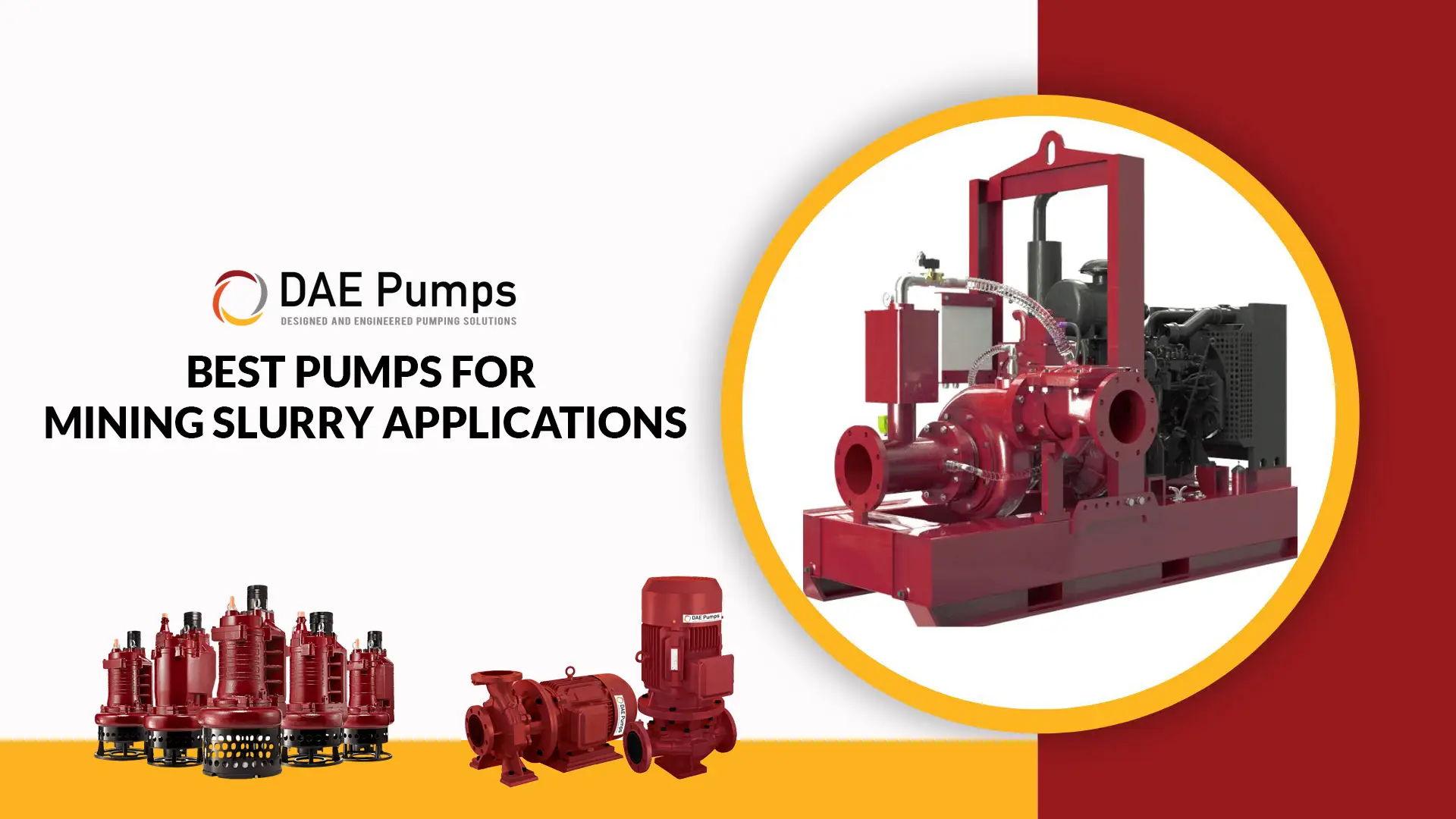
Horizontal Slurry Pumps
Horizontal slurry pumps are the most commonly used mining slurry pump configuration in large-scale processing operations. These pumps are designed for continuous high-flow slurry transport and are typically installed in fixed plant systems where maintenance access and operational stability are important. Their layout allows operators to service internal components more easily compared to submerged systems, making them common in mill circuits, mineral processing plants, and tailings transport applications.
These pumps are widely used in systems that require high throughput, stable operating conditions, and continuous slurry circulation over long operating periods. Heavy-duty horizontal slurry pumps are often configured with replaceable liners and wear-resistant components to manage abrasive mining material.
Best Use Cases:
- Cyclone feed systems
- Tailings transfer
- Thickener underflow
- Mineral processing plants
Vertical Slurry Pumps
Vertical slurry pumps are commonly used in sump and pit applications where slurry naturally collects below grade level. Many vertical systems use a cantilever design that eliminates submerged bearings, helping reduce maintenance problems associated with abrasive slurry exposure.
| Feature | Benefit |
| Cantilever design | Reduced submerged bearing issues |
| Sump-mounted installation | Handles pit collection |
| Open vertical structure | Simplified maintenance |
| No long suction line | Better solids handling |
These pumps are frequently installed in areas where slurry accumulation, overflow collection, or drainage management is required.
Applications:
- Sump drainage
- Tank cleaning
- Process pits
- Overflow handling
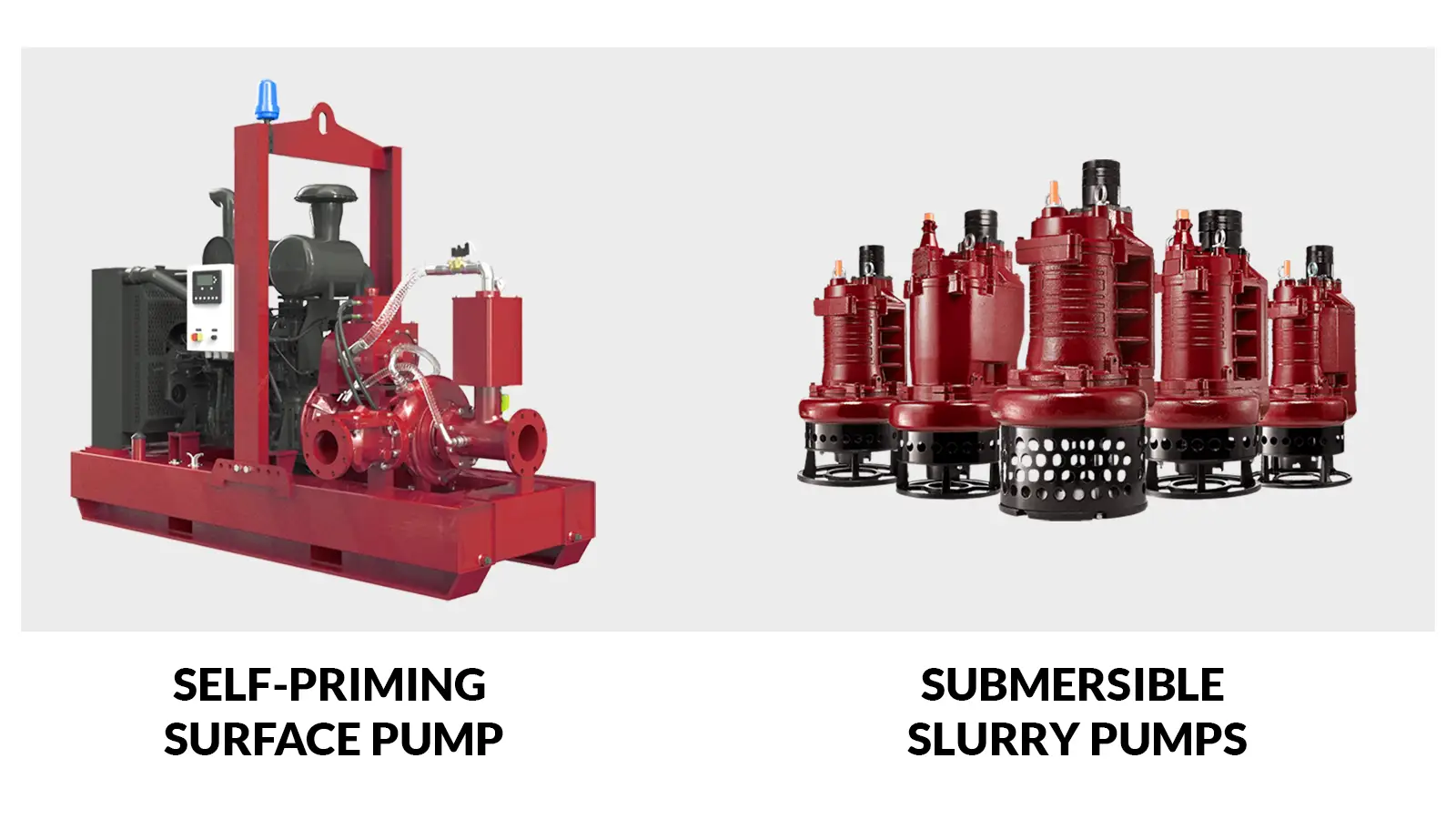
Submersible Slurry Pumps
Submersible slurry pumps operate directly inside the slurry being pumped. Because the pump is submerged, the system avoids many of the suction limitations associated with dry-mounted pumps. This makes submersible systems useful in flooded mining environments, deep pits, ponds, and temporary slurry removal projects.
Submersible slurry pumps are commonly selected for operations where portability, rapid deployment, or difficult access conditions are major concerns. Since the pump works directly within the slurry, cavitation risks associated with long suction lines are reduced.
Operational Advantages:
- Mobile deployment
- Deep pit access
- Reduced cavitation risk
- Direct solids interaction
Self-Priming Slurry Pumps
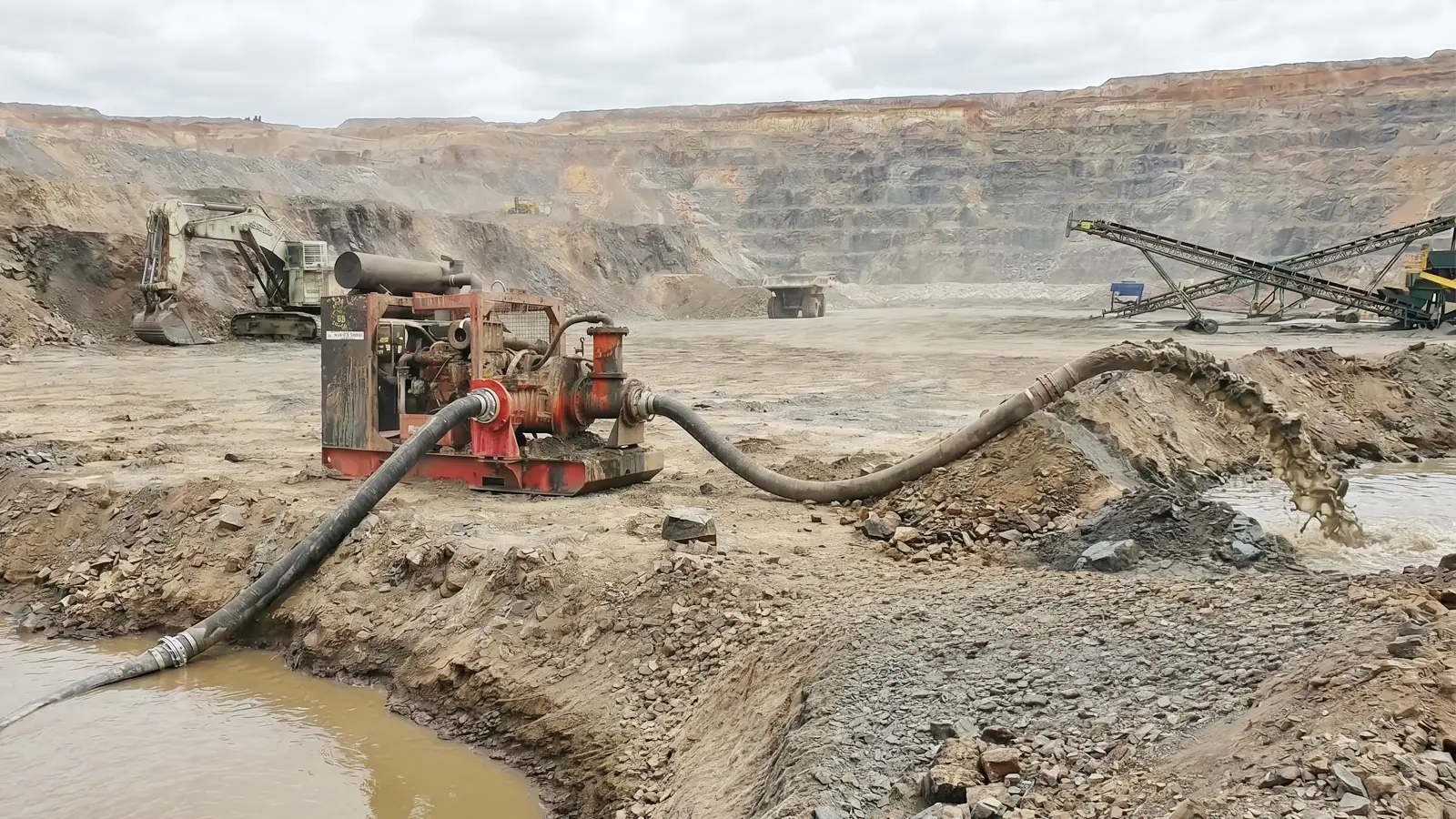
Self-priming slurry pumps operate from the surface while maintaining the ability to evacuate air from the suction line during startup. This configuration allows operators to keep the pump accessible for inspection and maintenance without placing the unit directly in the slurry.
These systems are often used when submerging equipment is impractical due to maintenance constraints, site layout, safety concerns, or power system limitations. Self-priming pumps are also useful for portable mining operations where frequent relocation is necessary. However, suction lift limitations can reduce effectiveness in extremely deep applications or very high-solids slurry conditions where maintaining consistent suction becomes difficult.
No single mining slurry pump works best for every mining operation. The most effective configuration depends on slurry severity, operating environment, maintenance accessibility, transport distance, and overall system requirements.
Which Pump Works Best for Different Mining Applications?
Mining operations rarely rely on a single slurry transport process. Material may move through multiple stages including excavation, processing, classification, dewatering, thickening, tailings disposal, and temporary transfer operations. Each stage creates different hydraulic conditions involving changes in solids concentration, particle size, transport distance, elevation, and system layout. Because of this, the most effective mining slurry pump for one part of the operation may not perform well in another.
Some applications prioritize continuous high-volume flow, while others require mobility, deep pit access, or the ability to handle unstable slurry conditions. Pump selection must therefore be based on the actual operating environment rather than choosing a single pump style for the entire mining site.
| Mining Application | Recommended Pump Type | Reason |
| Tailings transfer | Horizontal slurry pump | High flow and continuous operation |
| Mine sump dewatering | Vertical slurry pump | Handles fluctuating solids |
| Remote pit dredging | Submersible slurry pump | Direct slurry access |
| Thickener underflow | Heavy-duty horizontal pump | Dense slurry capability |
| Tunnel or underground pumping | Submersible pump | Space efficiency |
| Portable mining operations | Self-priming slurry pump | Easier relocation |
Tailings transfer systems typically require horizontal slurry pumps because these operations involve long-distance continuous slurry transport with relatively stable operating conditions. High flow capacity and easier maintenance access make them suitable for processing plants and fixed infrastructure.
Mine sump dewatering applications often use vertical slurry pumps because slurry conditions inside pits and collection sumps can fluctuate significantly. Vertical systems are effective at handling irregular inflow, overflow collection, and suspended solids accumulation.
Remote pit dredging and flooded mining areas frequently rely on submersible slurry pumps. These pumps operate directly inside the slurry, reducing suction limitations and simplifying deployment in areas where dry-mounted systems are difficult to install.
Thickener underflow applications usually involve extremely dense slurry with high solids concentration. Heavy-duty horizontal slurry pumps are commonly selected because they can manage higher loading conditions while maintaining stable transport velocity.
Underground mining and tunnel operations often require compact slurry systems that can function efficiently in confined spaces. Submersible pumps are commonly preferred because they reduce footprint requirements and eliminate long suction arrangements.
Portable mining projects and temporary transfer operations frequently use self-priming slurry pumps because they are easier to relocate, inspect, and service in changing field conditions.
The “best” mining slurry pump ultimately depends on the operating conditions of the specific application. Slurry characteristics, installation constraints, transport requirements, maintenance accessibility, and production targets all influence which pump configuration will perform most effectively over time.
Key Factors That Determine Mining Slurry Pump Selection
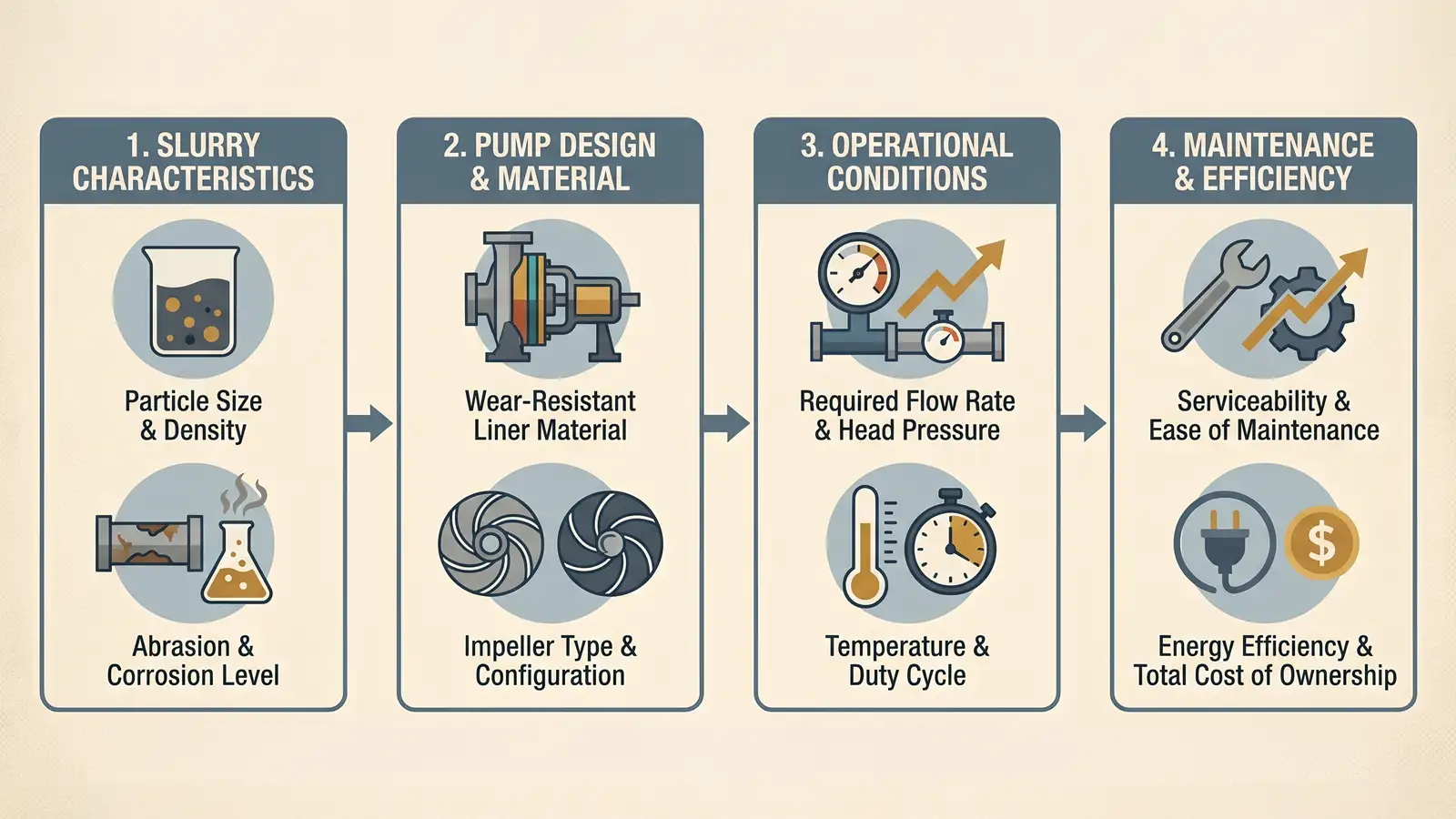
Mining slurry pump selection should be based on the overall operating system rather than only flow rate and discharge pressure. Slurry behavior changes significantly depending on solids concentration, particle size, transport distance, elevation changes, and pipeline conditions. A pump that performs well in one mining application may fail prematurely in another if the operating environment is not properly evaluated. Effective pump selection requires understanding both the hydraulic requirements of the system and the physical characteristics of the slurry being transported.
Solids Concentration
Higher solids concentrations place substantially greater stress on slurry pumps compared to low-density mixtures. As slurry density increases, pumps require more power to maintain flow velocity and prevent settling. Dense slurry also accelerates internal wear and increases loading on bearings, liners, impellers, and seals. Systems handling very high solids percentages often require slower operating speeds, larger clearances, or heavier-duty pump construction.
Particle Size and Shape
Particle characteristics directly affect wear rates inside slurry pumping systems. Sharp, coarse, and angular solids create significantly more abrasion than fine or rounded particles. Large solids can also create impact loading that damages impellers and internal wear components. Pump selection must account for both average particle size and the presence of oversized material within the slurry stream.
Flow Rate Requirements
Flow rate determines how much slurry must move through the system within a given time period. Mining operations often require pumps capable of maintaining stable transport velocity while meeting production targets. If flow velocity becomes too low, solids may settle inside pipelines and create plugging issues. Excessively high velocity, however, can increase wear rates and unnecessary power consumption.
Total Dynamic Head (TDH)
Total Dynamic Head represents the total resistance the pump must overcome to move slurry through the system. This includes elevation changes, friction losses inside pipelines, bends, valves, fittings, and discharge pressure requirements. Slurry systems typically experience higher friction losses than clean water systems because suspended solids increase resistance throughout the pipeline.
Pump Location
Pump installation location strongly influences the type of slurry pump that can be used effectively.
| Installation Type | Typical Pump Choice |
| Dry mounted | Horizontal or self-priming |
| Submerged | Submersible |
| Pit or sump | Vertical slurry pump |
The operating environment determines whether the pump requires suction capability, submerged operation, or direct pit installation.
Maintenance Accessibility
Maintenance access is a major consideration in mining operations where equipment downtime directly affects production. Dry-mounted horizontal and self-priming pumps are generally easier to inspect and service because components remain accessible above ground. Submersible systems may require removal from the slurry before maintenance can be performed, which can increase service complexity in some operations.
Wear Material Selection
Slurry pumps use different wear materials depending on slurry severity, chemical exposure, and particle characteristics.
- High chrome
- Hardened iron
- Elastomers
- Specialty alloys
- Ceramic-lined components
Material selection plays a major role in wear life, maintenance intervals, and long-term operating cost.
Mining slurry pump selection is ultimately a balance between hydraulic performance, wear resistance, maintenance practicality, and operational reliability. The most effective system is not always the largest or highest-powered pump, but the configuration best matched to the actual slurry conditions and operating environment.
Common Problems Caused by Incorrect Slurry Pump Selection
Many mining slurry pump failures are not caused by manufacturing defects, but by selecting a pump that does not match the actual operating conditions of the slurry system. Pumps designed for lower solids concentrations, smaller particles, or lighter-duty service often experience rapid wear and unstable performance when exposed to demanding mining environments. In many cases, recurring operational problems originate from incorrect pump sizing, unsuitable materials, insufficient transport velocity, or improper hydraulic configuration.
Excessive Impeller Wear
Impellers wear rapidly when pumps operate with abrasive slurry that exceeds the design limits of the internal components. Sharp mineral particles and excessive velocity can significantly shorten wear life.
Frequent Clogging
Pumps with insufficient internal clearances or poor solids handling capability may clog repeatedly when transporting coarse particles or dense slurry mixtures.
Cavitation
Improper suction conditions, excessive suction lift, or inadequate Net Positive Suction Head (NPSH) can cause cavitation. This creates vapor bubbles that damage internal pump surfaces and reduce performance.
Pipeline Settling
If the pump cannot maintain the required slurry transport velocity, solids begin settling inside the pipeline. This increases resistance and can eventually cause complete blockage.
Bearing Failures
Excessive loading from dense slurry, vibration, or imbalance places additional stress on bearings. Poor operating conditions often shorten bearing life significantly.
Seal Failures
Mechanical seals can fail prematurely when exposed to abrasive slurry, dry running conditions, pressure instability, or inadequate flush systems.
Loss of Production Flow
Incorrect pump sizing may prevent the system from maintaining required production throughput, reducing overall mining efficiency.
Excessive Power Consumption
Oversized pumps or poorly matched operating points often consume unnecessary energy while operating inefficiently.
Proper system analysis and slurry-specific engineering help reduce recurring operational problems by matching the pump configuration, materials, and hydraulic performance to the actual mining conditions. Effective slurry pump selection improves reliability, stabilizes production flow, and reduces long-term maintenance costs.
Horizontal vs Vertical vs Submersible Mining Slurry Pumps
Mining operators frequently compare horizontal, vertical, and submersible slurry pumps because each configuration performs differently depending on the operating environment and slurry conditions. The best configuration is usually determined by installation layout, slurry depth, maintenance accessibility, mobility requirements, and the characteristics of the material being transported. While all three pump types are designed for slurry handling, their operating advantages and limitations vary significantly across mining applications.
| Feature | Horizontal | Vertical | Submersible |
| Installation | Dry mounted | Sump mounted | Fully submerged |
| Maintenance access | Excellent | Moderate | Requires removal |
| Solids handling | High | Moderate to high | High |
| Mobility | Lower | Fixed | High |
| Priming concerns | Possible | Minimal | None |
| Deep pit capability | Limited | Moderate | Excellent |
Horizontal slurry pumps are commonly used in fixed mining infrastructure where high flow capacity, continuous operation, and easier maintenance access are important. Since the pump remains dry mounted, operators can service components without removing the unit from the slurry system. These pumps are widely used in processing plants, tailings systems, and long-distance slurry transport operations.
Vertical slurry pumps are typically installed in pits, tanks, and sumps where slurry naturally accumulates below grade level. Their configuration allows the pump to operate with minimal suction complications while handling fluctuating slurry levels. However, they are generally less portable and are commonly used in fixed sump applications.
Submersible slurry pumps operate directly inside the slurry and eliminate most suction-related limitations. These systems are highly effective in flooded mining areas, deep pits, and temporary operations where portability and direct slurry access are important. Their ability to function fully submerged also reduces priming concerns and improves performance in difficult access conditions.
The most effective slurry pump configuration depends heavily on site layout, slurry behavior, installation constraints, maintenance strategy, and overall system requirements. Mining operations often use multiple pump configurations across different stages of material transport to address varying operating conditions efficiently.
Choosing the Right Mining Slurry Pump for Long-Term Reliability
There is no single mining slurry pump that works best for every mining operation. Effective pump selection depends on slurry characteristics such as particle size, solids concentration, density, abrasiveness, transport distance, and required production flow. Different stages of mining operations often require different pump configurations to handle changing hydraulic conditions and material behavior. Horizontal slurry pumps may be suitable for continuous plant operations, while vertical or submersible systems may perform better in pits, sumps, flooded areas, or temporary transfer applications. Selecting the correct pump involves evaluating the full operating environment rather than choosing equipment based only on flow and pressure requirements.
Long-term slurry pumping reliability depends as much on overall system design as on the pump itself. Pipeline layout, transport velocity, suction conditions, wear materials, maintenance accessibility, and operating practices all influence equipment life and performance stability. Proper slurry pump selection helps reduce excessive wear, unplanned downtime, seal failures, pipeline plugging, and unnecessary power consumption. Mining slurry transport should therefore be approached as a complete engineered system where the pump, pipeline, slurry behavior, and operating conditions are all matched together to maintain reliable long-term operation.
Frequently Asked Questions
What is the best pump type for mining slurry applications?
There is no single pump type that works best for every mining operation. The ideal mining slurry pump depends on slurry density, particle size, transport distance, operating environment, and production requirements. Horizontal pumps are commonly used in fixed processing systems, while vertical and submersible pumps are often better suited for pits, sumps, and flooded mining areas.
Why do standard water pumps fail in mining slurry applications?
Standard water pumps are not designed to handle abrasive solids or high-solids mixtures. Mining slurry rapidly wears internal components such as impellers, liners, and seals, while dense slurry conditions can reduce efficiency, increase loading, and create clogging or settling problems.
When should a submersible slurry pump be used?
Submersible slurry pumps are commonly used in flooded pits, underground mining areas, ponds, and temporary slurry removal applications. Because the pump operates directly inside the slurry, it eliminates many suction limitations and performs well in deep or difficult-access environments.
What causes excessive wear in mining slurry pumps?
Excessive wear is usually caused by abrasive solids, sharp particles, improper operating speed, cavitation, or incorrect material selection. Slurry with large or angular mineral particles creates continuous erosion inside the pump and pipeline system during operation.
Why is slurry transport velocity important?
Proper slurry velocity keeps solids suspended during transport. If velocity becomes too low, solids can settle inside the pipeline and create plugging issues. Excessively high velocity, however, can increase wear rates and unnecessary power consumption.
How can mining operations reduce slurry pump downtime?
Downtime can be reduced through proper pump selection, correct system design, wear-resistant materials, stable operating conditions, and preventive maintenance. Monitoring slurry behavior and maintaining proper transport velocity also help improve long-term reliability and reduce recurring failures.