- Electric vs Hydraulic Dredge Pumps: 2026 Buyer Guide
- Quick Answer: Which Dredge Pump Power System Is Better?
- Why Buyers Are Re-Evaluating Dredge Pump Power Systems
- What Changes When You Choose Electric vs Hydraulic?
- When Electric Dredge Pumps Make More Sense
- When Hydraulic Dredge Pumps Make More Sense
- Electric vs Hydraulic Dredge Pump Comparison
- Operational Costs Buyers Often Miss
- Common Buyer Mistakes
- What Buyers Are Prioritizing in 2026
- How to Choose the Right DAE Pump Configuration
- Final Takeaway
- Frequently Asked Questions
| Element | Current | Recommended |
| Slug | electric-vs-hydraulic-dredge-pumps | Keep as written. It is clean and keyword-aligned. |
| H1 / Blog title | Electric vs Hydraulic Dredge Pumps: What Buyers Are Switching To in 2026 | Electric vs Hydraulic Dredge Pumps: 2026 Buyer Guide |
| Alternate title | N/A | Electric vs Hydraulic Dredge Pumps: How to Choose the Right Power System |
| Meta title | Electric vs Hydraulic Dredge Pumps | 2026 Buyer Guide | Keep, or use Electric vs Hydraulic Dredge Pumps | DAE Pumps Guide |
| Meta description | Compare electric and hydraulic dredge pumps for cost, mobility, maintenance, environmental requirements, and heavy-solids applications. | Compare electric vs hydraulic dredge pumps by power access, mobility, maintenance, cost, environment, slurry conditions, and dredging application. |
| Primary keyword | electric vs hydraulic dredge pump | Use both singular and plural naturally: electric vs hydraulic dredge pump and electric vs hydraulic dredge pumps. |
| Secondary keywords | electric dredge pump, hydraulic dredge pump, dredge pump selection, dredging pump power options | Add excavator dredge pump, submersible dredge pump, hydraulic submersible pump, electric slurry pump, dredging equipment selection. |
Electric vs Hydraulic Dredge Pumps: 2026 Buyer Guide

Quick Answer: Which Dredge Pump Power System Is Better?
Electric dredge pumps are usually the better fit for fixed facilities, continuous-duty operation, and projects with reliable electrical infrastructure. Hydraulic dredge pumps are usually the better fit for remote sites, mobile dredging, excavator-mounted systems, and projects where equipment must move frequently or operate away from permanent power.
Neither option is automatically better. The right choice depends on power availability, slurry conditions, discharge distance, cable or hose routing, maintenance capability, environmental requirements, and how the dredging system will actually be deployed in the field.
Why Buyers Are Re-Evaluating Dredge Pump Power Systems
Many dredging problems are blamed on the pump when the real issue is the system around it. A pump may be properly sized on paper but still create downtime if the power source, hose layout, cable routing, maintenance access, or deployment plan does not match the jobsite.
That is why more contractors, municipalities, wastewater facilities, mining operations, and industrial plants are comparing electric and hydraulic dredge pump systems before buying. The decision affects more than horsepower. It affects mobility, setup time, support equipment, operating cost, field service, environmental compliance, and long-term reliability.
For buyers evaluating a new dredging system in 2026, the better question is not simply, “Which pump is bigger?” The better question is, “Which power system fits the operating environment?”

What Changes When You Choose Electric vs Hydraulic?
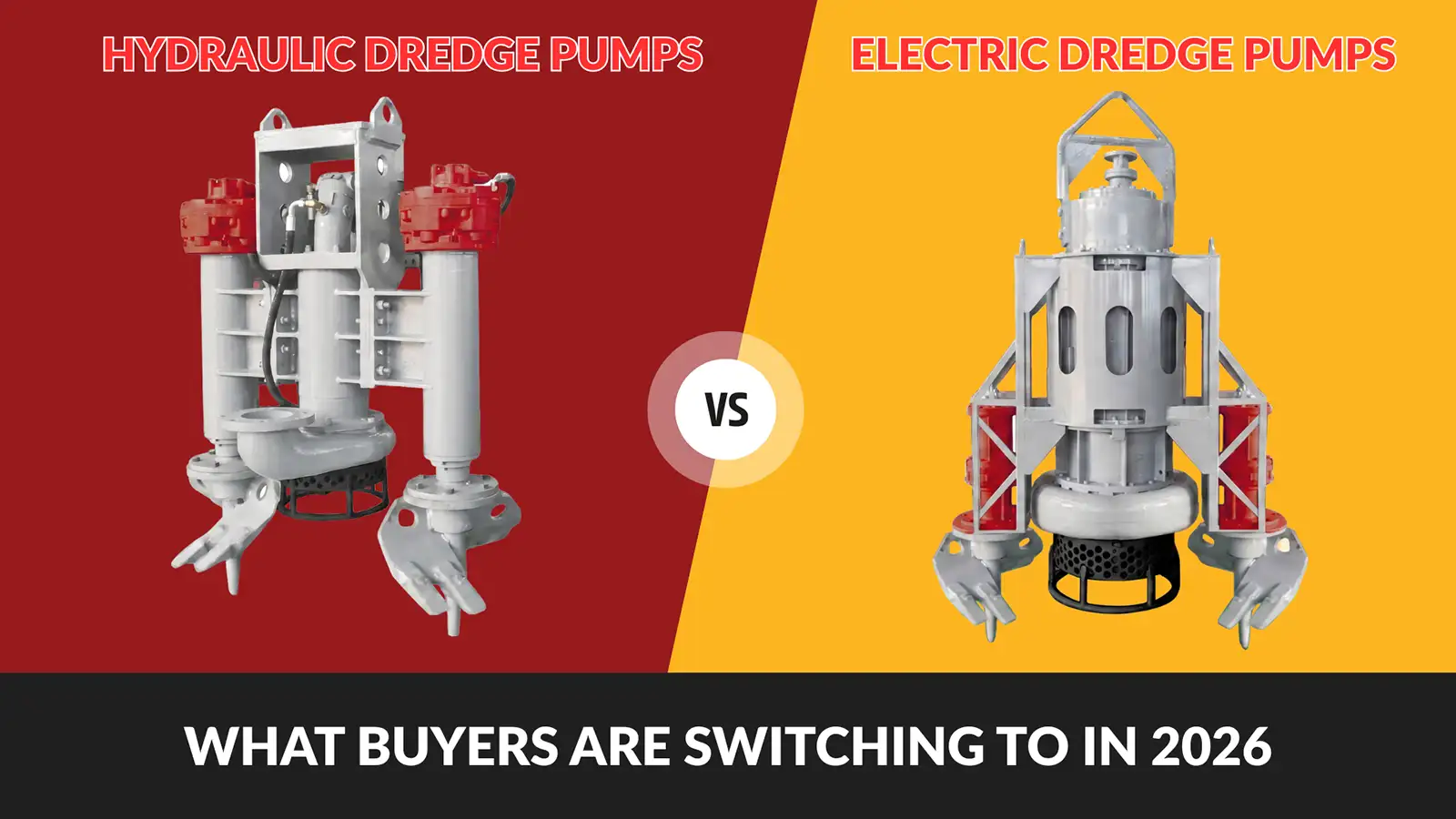
The main difference is how power reaches the pump. Electric dredge pumps use electrical power to drive the motor. Hydraulic dredge pumps use a hydraulic power unit or equipment hydraulic circuit to transfer energy through pressurized fluid.
That difference changes how the system is deployed. Electric systems require proper voltage, electrical distribution, cable routing, cable protection, and safety planning. Hydraulic systems require a hydraulic power unit or hydraulic machine connection, hose routing, pressure management, fluid cleanliness, cooling, and service access.
The power source does not determine slurry-handling capability by itself. A hydraulic dredge pump is not automatically better for heavy solids, and an electric dredge pump is not automatically limited to lighter-duty work. Pump design, wear materials, solids concentration, particle size, flow rate, total dynamic head, and pipeline layout are still the factors that determine whether the system will move material reliably.
When Electric Dredge Pumps Make More Sense
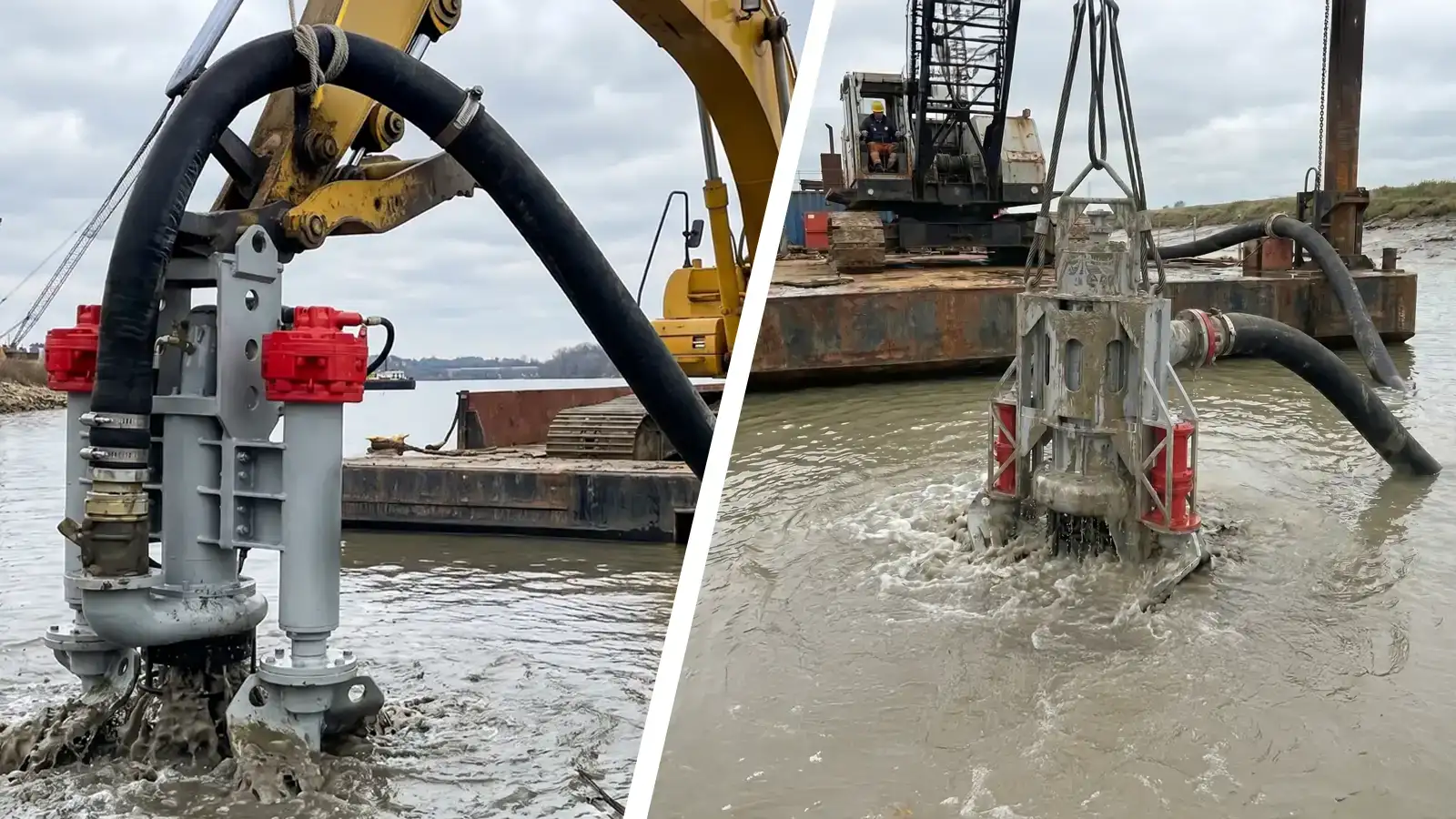
Electric dredge pumps often make the most sense where reliable power is already available and the pump will operate from a fixed or mostly stationary location. This includes many wastewater facilities, industrial lagoons, ash ponds, sediment basins, process-water systems, and plant-based maintenance dredging applications.
Electric systems can reduce dependency on fuel logistics and may be attractive where noise, emissions, or hydraulic fluid exposure are important concerns. They can also be a strong fit for recurring or long-duration dredging where the equipment runs for extended shifts and the site has the electrical infrastructure to support it.
Best-fit electric applications often include:
- Wastewater lagoons and clarification basins
- Industrial process-water ponds
- Ash ponds and sediment basins
- Fixed plant maintenance dredging
- Projects with reliable grid power or planned generator support
- Sites where lower onsite noise or emissions are priorities
Electric systems still need careful planning. Buyers should confirm voltage requirements, cable length, cable protection, electrical safety rules, service access, and backup power before selecting an electric dredge pump configuration.

When Hydraulic Dredge Pumps Make More Sense
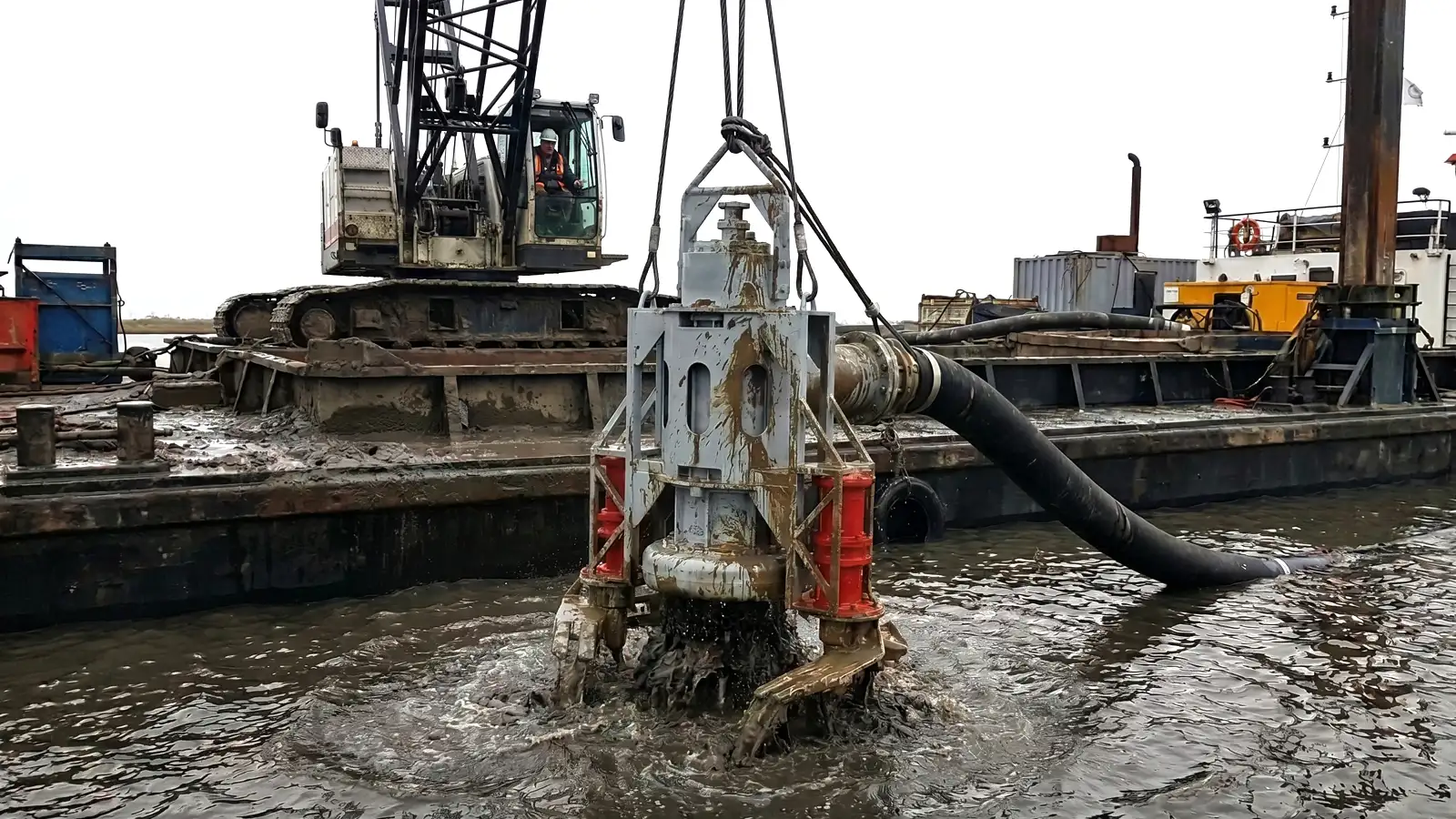
Hydraulic dredge pumps remain a strong choice for mobile, remote, and equipment-integrated dredging. They are commonly used where permanent power is limited, the dredging area changes frequently, or the pump must be mounted to an excavator, barge, or temporary deployment system.
Hydraulic systems are especially useful in field conditions where mobility matters more than centralized efficiency. An excavator-mounted hydraulic dredge pump can be moved between work areas without installing electrical infrastructure at each point. A hydraulic submersible pump can also be powered from a hydraulic power unit positioned onshore, on a barge, or on support equipment, depending on the project layout.
Best-fit hydraulic applications often include:
- Remote mining ponds and tailings areas
- Excavator-mounted dredging
- Temporary dredging projects
- Shallow ponds, canals, and sediment basins
- Sites with limited electrical infrastructure
- Applications requiring frequent repositioning
Hydraulic systems are not maintenance-free. Buyers should plan for hose wear, leak prevention, fluid cleanliness, pressure management, heat control, fittings, cooling, and hydraulic power unit sizing. In long-duration projects, those requirements can directly affect uptime and lifecycle cost.
Electric vs Hydraulic Dredge Pump Comparison
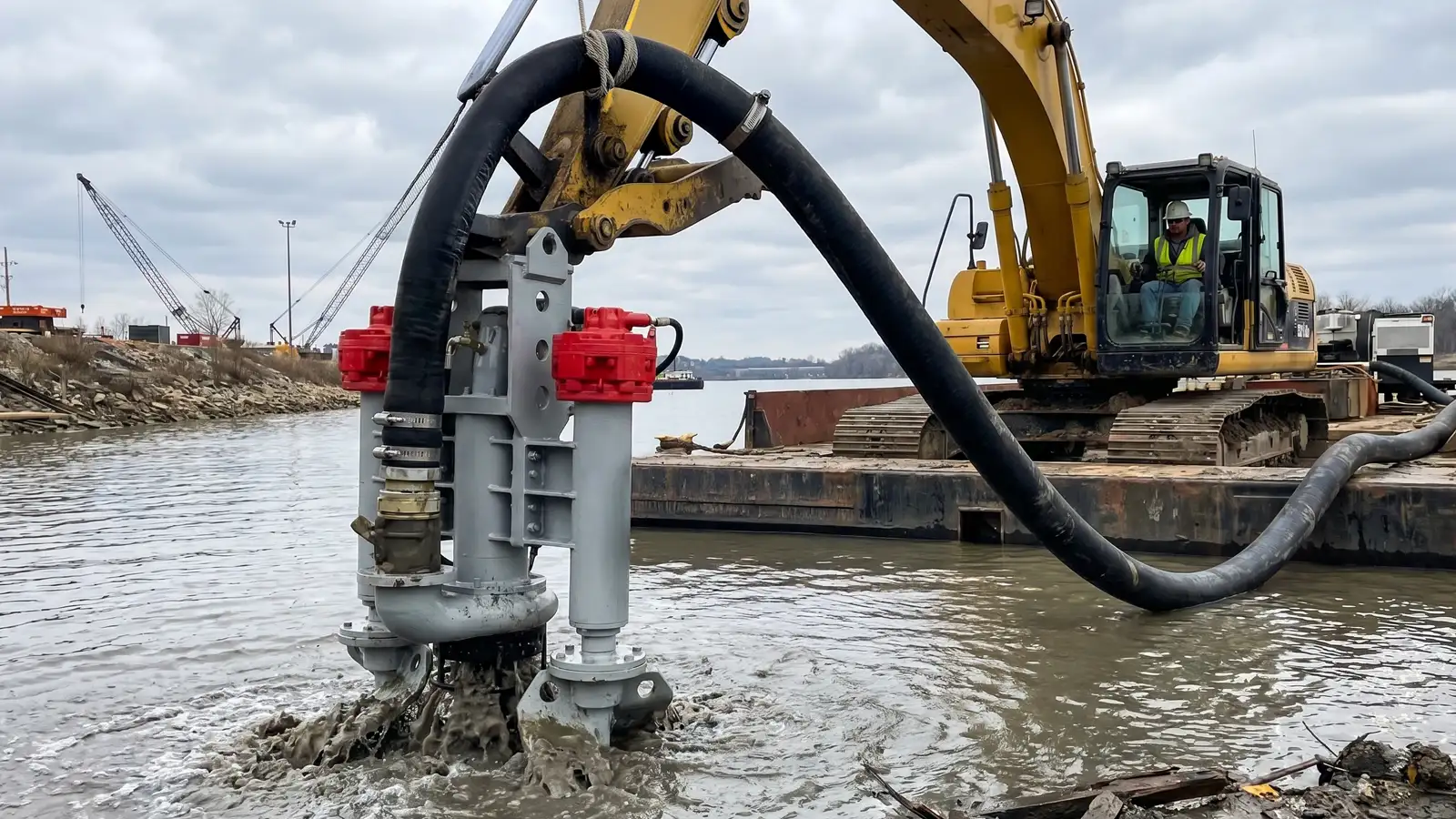
Use the comparison below as a planning guide, not a replacement for engineering review. Site conditions, material behavior, and pipeline requirements still need to be evaluated before final equipment selection.
| Operating Condition | Electric Dredge Pump Advantage | Hydraulic Dredge Pump Advantage |
| Fixed facility with reliable power | Strong fit | May add unnecessary support equipment |
| Remote site with limited power | Generator or power distribution likely required | Strong fit |
| Excavator-mounted dredging | Possible in some configurations, but power planning is more complex | Strong fit |
| Continuous-duty industrial operation | Strong fit when infrastructure is available | Works, but maintenance and fluid management increase |
| High mobility or frequent repositioning | Cable routing can become limiting | Strong fit |
| Environmental restrictions | Often favorable for emissions, noise, and reduced hydraulic fluid handling | May require added spill-prevention planning |
| Cable or hose risk | Requires cable protection and electrical safety planning | Requires hose protection, leak prevention, and pressure management |
| Maintenance focus | Electrical inspections, motor diagnostics, cable management | Hoses, fittings, fluid cleanliness, cooling, pressure system checks |
Operational Costs Buyers Often Miss
The purchase price of the pump is only one part of the decision. The more expensive problems often appear after deployment, when the system is difficult to service or does not match the jobsite.
Electric dredge systems may require electrical upgrades, generators, substations, transformers, variable frequency drives, cable protection, and electrical inspections. Hydraulic systems may require hydraulic power units, hose replacement, fluid management, cooling systems, additional fittings, and pressure-system maintenance.
Downtime risk should also be part of the buying decision. A damaged underwater cable, leaking hydraulic hose, overheated hydraulic system, motor fault, poor pipeline design, or limited field service access can stop production regardless of pump type. For many projects, the most reliable system is the one that can be maintained quickly and safely under actual site conditions.
Common Buyer Mistakes
Buyers often run into trouble when they compare electric and hydraulic systems using only horsepower, flow rate, or upfront price. Those numbers matter, but they do not tell the whole story.
Common mistakes include:
- Assuming hydraulic pumps automatically handle abrasive slurry better
- Assuming electric systems are always simpler because they have fewer hydraulic service points
- Ignoring cable routing, hose routing, or protection requirements
- Underestimating the cost of generators, power upgrades, hydraulic power units, or support equipment
- Choosing a mobile hydraulic system for a fixed facility where mobility is rarely needed
- Choosing an electric system for a remote jobsite without confirming power availability
- Failing to account for slurry density, solids size, discharge distance, elevation change, and pipeline friction
- Selecting equipment based only on purchase price instead of lifecycle operating cost
What Buyers Are Prioritizing in 2026
Dredge pump buyers are becoming more focused on complete system performance. Flow rate and horsepower still matter, but many buyers now give equal weight to deployment speed, downtime risk, maintenance access, labor availability, environmental requirements, energy use, monitoring capability, and future scalability.
This does not mean the market is moving entirely toward electric or hydraulic systems. The stronger trend is selectivity. Electric dredge pumps are gaining attention in fixed facilities and environmentally regulated applications. Hydraulic systems remain essential for remote, mobile, and excavator-based dredging. Many contractors and industrial operators will continue using both, matching each power system to the project.
How to Choose the Right DAE Pump Configuration
The right DAE dredge pump configuration should be selected after reviewing the complete operating system. Before choosing electric or hydraulic, buyers should confirm:
- Material type and abrasiveness
- Solids concentration and particle size
- Required flow rate and production target
- Pipeline length and elevation change
- Available power or hydraulic support
- Required mobility and repositioning frequency
- Cable or hose routing limitations
- Maintenance access and service capability
- Environmental restrictions
- Downtime risk and project schedule
A properly matched dredge pump system should support the slurry conditions, the jobsite, and the maintenance strategy. The best option is not always the largest pump or the most familiar power source. It is the system that can run reliably in the environment where it will actually work.
Final Takeaway
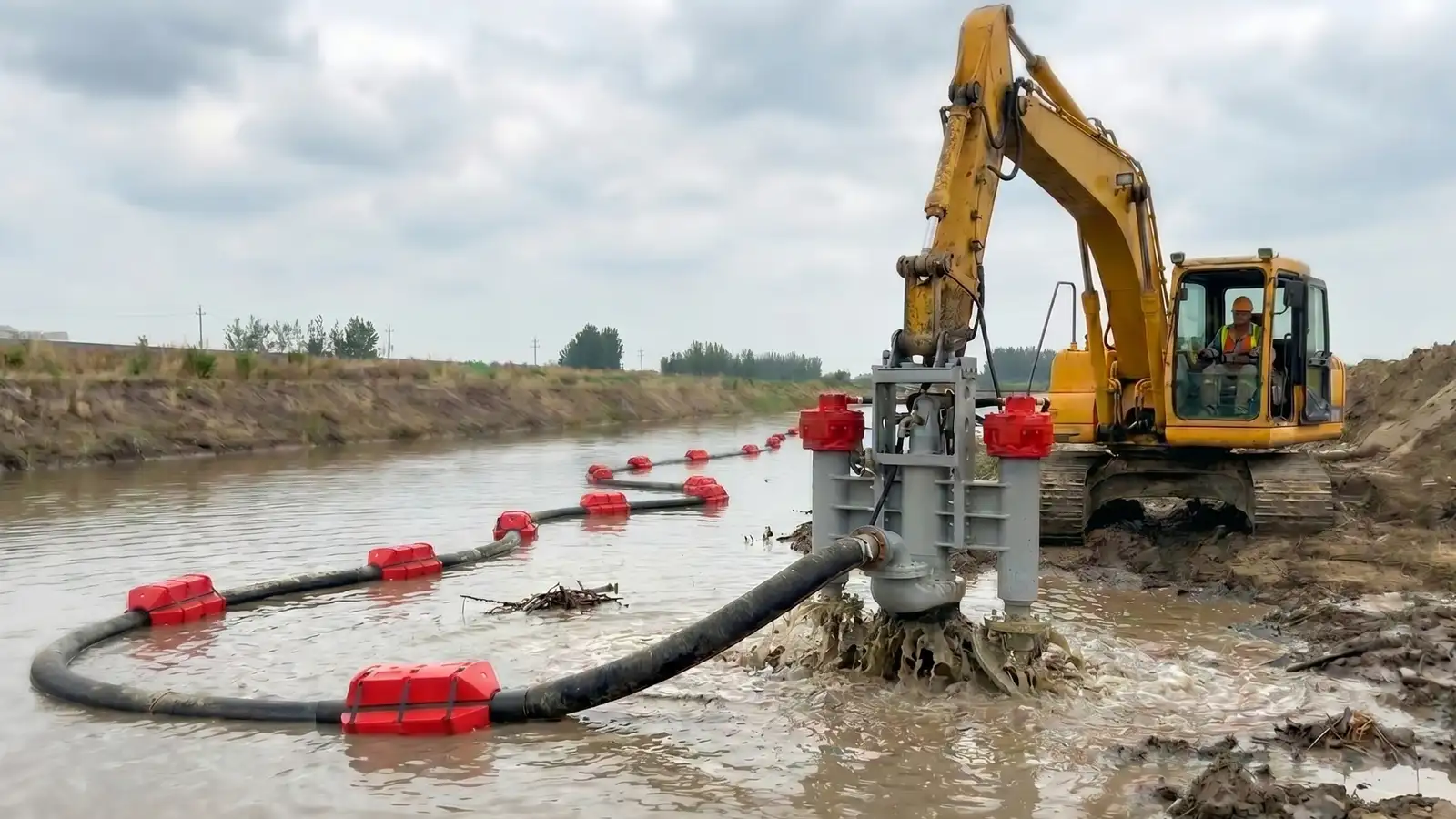
Electric and hydraulic dredge pumps solve different problems. Electric systems are often the better fit for fixed facilities, stable power infrastructure, and continuous operation. Hydraulic systems are often the better fit for remote sites, mobile dredging, excavator integration, and frequent repositioning.
For most buyers, the smartest decision comes from evaluating the full system: slurry behavior, pipeline design, power access, maintenance capability, environmental requirements, and deployment logistics. Match the power system to the field conditions, and the pump has a far better chance of doing what it was bought to do.
Frequently Asked Questions
Is an electric or hydraulic dredge pump better?
Neither is universally better. Electric dredge pumps are usually better for fixed facilities with reliable power and long operating cycles. Hydraulic dredge pumps are usually better for remote, mobile, and excavator-integrated applications.
Do hydraulic dredge pumps handle abrasive slurry better?
Not automatically. Abrasive slurry performance depends on pump design, wear materials, solids concentration, particle size, pump speed, and system configuration. Hydraulic systems are often used in harsh field conditions because they are easier to deploy in remote or mobile settings.
When should I choose an electric dredge pump?
Choose an electric dredge pump when stable power is available, the system will operate from a fixed or mostly stationary location, and the project benefits from reduced fuel logistics, lower noise, and continuous-duty operation.
When should I choose a hydraulic dredge pump?
Choose a hydraulic dredge pump when the project is remote, temporary, excavator-mounted, frequently repositioned, or difficult to support with permanent electrical infrastructure.
What costs are often overlooked?
Commonly overlooked costs include generators, substations, power distribution, cable protection, hydraulic power units, hose replacement, fluid management, cooling, inspections, downtime, and field service logistics.
Can the same dredging application use either electric or hydraulic power?
In some cases, yes. The final choice depends on available utilities, production goals, slurry behavior, mobility requirements, hose or cable routing, and maintenance support. A system review is the safest way to choose the correct configuration.