


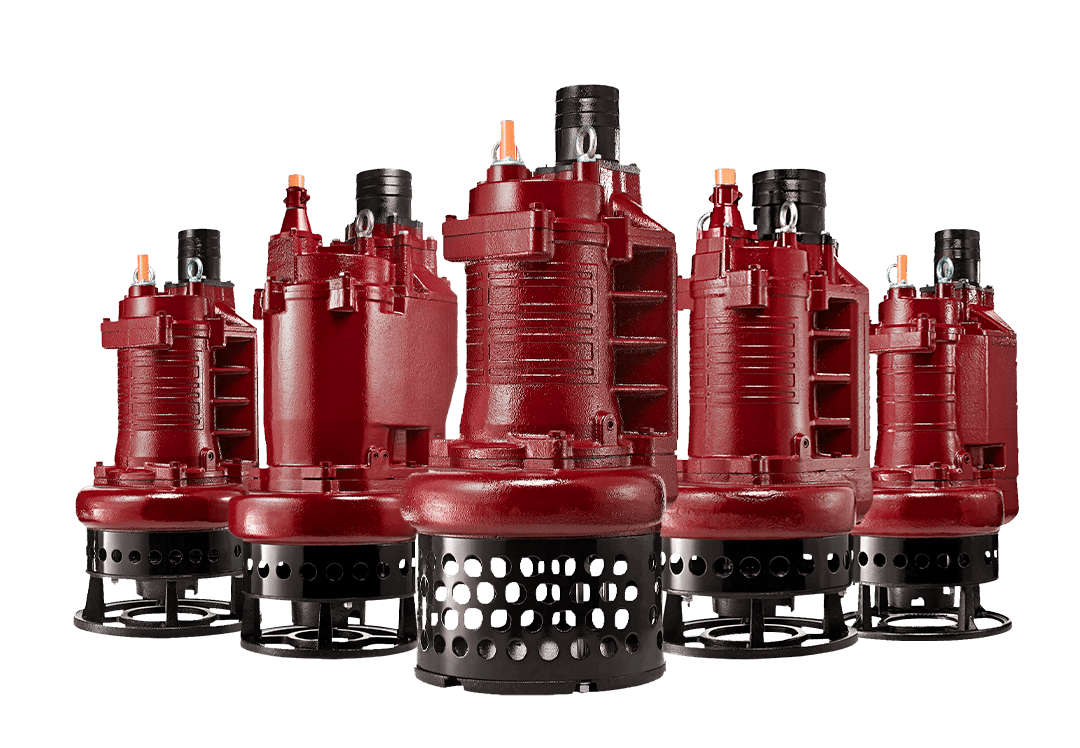
Submersible Slurry Pumps
The DAE Pumps Submersible Slurry Pumps are designed for an extensive range of industrial applications. With their robust designs, submersible slurry pumps move abrasive slurries, sand, and other material with ease, a key factor for dredging applications. Heavy-duty submersible slurry pumps from DAE Pumps are capable of pumping solids up to 2112 GPM with as much as 102 HP. DAE Pumps submersible slurry pumps are available in a wide range of models in 3-inch, 4-inch, 6-inch, and 8-inch sizes.
Our non-clogging submersible slurry pumps are the toughest in the industry and have the largest apertures to facilitate the handling of abrasive slurries with the most challenging solids. The high-efficiency high chrome agitator lifts up to 2.5-inch settled solids. The robust design uses heavy-duty bearings to withstand shocks, and overloads and a double silicon carbide mechanical seals for duty application.
DAE Pumps robust submersible slurry pumps are made to perform. The unique sealing system and modular design make them the most flexible pumps on the market. Easy to use and maintain, these pumps provide the optimum maintenance solution and can be easily fitted at the job site. These heavy-duty submersible slurry pumps offer a motor protection system with a built-in starter and optional automatic level control. The hardened high-chrome impellers and adjustable wear-resistant rubber diffuser feature ensure durability in the toughest environments.
At DAE Pumps, we have a complete range of high-quality submersible slurry pumps made for dewatering and dredging the most abrasive media, like sand, with high solid content in quarries and mining operations. The user-friendly design and easy-to-use submersible sand and slurry pumps are why they are the preferred choice for submersible pumps.

Get Pricing
Submersible Slurry and Sand Pumps
Features
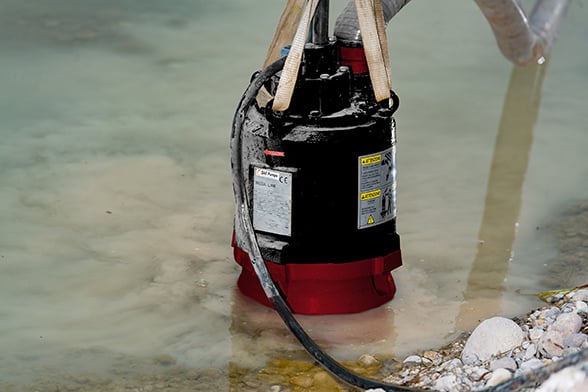
- Water density up to 14.18 lb/gal
- Bottom side and top discharge design
- Solid handling 2.5 inch
- pH values from 2 to 10
- Efficient electric motor with insulation class H with PTC and Clicson thermal protection
- High-quality cable sealing to ensure protection against water leakage
- Heavy-duty bearings to withstand shocks and overloads
- Reinforced double silicon carbide mechanical seal for duty applications
- Unique aluminum alloy offers the perfect combination of strength, light-weight, and corrosion resistance
- High-chrome impellers provide higher wear resistance
- A wide base ensures stability while enabling the passage of large solids
Specifications:
| Model | Size | Power | Volume | Head | Solids |
|---|---|---|---|---|---|
| Tampa 337 | 3″ | 5 HP | 343 GPM | 49′ | 1″ |
| Tampa 355 | 3″ | 7.5 HP | 449 GPM | 69′ | 1″ |
| Tampa 437 | 4″ | 5 HP | 476 GPM | 46′ | 1″ |
| Lansing 340 | 3″ | 5.5 HP | 435 GPM | 45′ | 1.15″ |
| Tampa 455 | 4″ | 7.5 HP | 594 GPM | 57′ | 1″ |
| Lansing 460 | 4″ | 8 HP | 635 GPM | 55′ | 1.15″ |
| Tampa 475 | 4″ | 10 HP | 655 GPM | 61′ | 1″ |
| Lansing 690 | 6″ | 12 HP | 845 GPM | 70′ | 1.15″ |
| Tampa 4110 | 4″ | 15 HP | 819 GPM | 85′ | 1″ |
| Tampa 6110 | 6″ | 15 HP | 977 GPM | 72′ | 1.4″ |
| Tampa 6150 | 6″ | 20 HP | 1136 GPM | 100′ | 1.4″ |
| Tampa 6150-L | 6″ | 20 HP | 1453 GPM | 75′ | 1.4″ |
| Lansing 8150 | 8″ | 20 HP | 1600 GPM | 72′ | 1.15″ |
| Tampa 6220 | 6″ | 30 HP | 1268 GPM | 105′ | 1.2″ |
| Tampa 8220 | 8″ | 30 HP | 1664 GPM | 79′ | 1.4″ |
| Lansing 8220 | 8″ | 30 HP | 1575 GPM | 100′ | 1.15″ |
We Are Here To Help!
For help selecting a pipe float, hose, or pump, call us at (760) 821-8112 or submit a request today.

Selecting A Submersible Slurry and Sand Pump
Submersible slurry pumps and submersible sand pumps offer the highest in quality and strength over other submersible pumps. They are capable of moving large amounts of sand and slurry with ease and without clogging. DAE Pumps submersible sand and slurry pumps withstand the abrasive material that passes through them on a consistent basis and provide the power to move the material. The following is to help understand pump specifications for selecting the right submersible slurry pump or sand pump for you. A DAE Pumps representative is also available.
Size
The size of the submersible pump is important when connecting the discharge end. The hose or pipe that connects to the pump should match the discharge or the pump. If fitting an adjustment to the end of the submersible slurry pump, the fitting can only work when goes downward in size, not upward. Typically, the pump size limits the gallons per minute a submersible slurry pump is capable of pumping. The larger the pump size, the more allowable volume, and solids sizes.
Power
The power of the electrical submersible slurry pump is determined by the motor size in horsepower. The more horsepower, the more material it can move (volume), and the higher the head of which it can pump. When moving sand and slurry, it is important to take horsepower into consideration. As sand and slurries can be heavy, this causes friction that slows down the movement of the material. If there is too much friction and the submersible sand pump is not powerful enough to push the sand or slurry, the material will start to settle in the hose or piping, and not deliver to the final destination.
Volume
When selecting a submersible slurry or sand pump be sure to understand the volume of the material you are looking to move. Submersible pump specifications are typically based on pumping water. When pumping sand, slurry, and other solids, DAE Pumps industrial slurry pumps move between 15% to 30% solids. Therefore, the remaining 70% to 85% is water. While a 100 GPM sand pump can process about 15% material, thus 15 GPM of sand, a 100 GPM slurry pump can process about 30% material, thus 30 GPM of slurry. This all varies depending on how aggressive the operator is with the pump. Ensuring the correct power of a sand pump is essential for delivering sand the distance needed because sand is heavy and settles. Not enough power will leave sand in the hose and backup. Knowing the liquid viscosity is important for ensuring proper pumping. Ask DAE Pumps for assistance with a viscosity test to ensure accurate pump selection.
In addition to the amount of material you pump, you want to make sure there is a consistent inflow of water or fluid replacing liquid and material that is being pumped out for the proper operation. Lack of fluid is never good for submersible pumps.
Here are a couple of equations and examples to help figure out how much material a submersible slurry pump can move and approximately how long it will take to move your material.
Material to Cubic Yards
Equation:
Length (feet) x Width (feet) x Depth (feet) / 27 = Cubic Yards
Example:
50 x 50 x 2 / 27 = 185 Cubic Yards
Cubic Yards to Gallon
1 Cubic Yard = 201.974 Gallons)
Number of Cubic Yards x 201.974 = Gallons of Material
185 x 201.974 = 37,365 Gallons of Material
Pumps Capability of Moving Solids Per Minute
Equation:
Pump GPM x .15 = Pump Amount of Solids Per Minute
Example:
2112 x .15 = 316.8
Total Minutes to Pump Material
Equation:
Gallons of Material / Pump Amount of Solids Per Minute = Total Minutes
37,365 / 316 = 118.25
Hours to Pump Material
Equation:
Total Minutes / 60 = Total Hours
118.25 / 60 = 2 Hours
Head
The head is the height at which the pump can raise water. The weight of a gallon of water at room temperature is 8.33 lbs. If all that is being pumped is room temperature water, the height a submersible slurry pump could pump that water is the max head stated on the pump specifications. However, submersible slurry pumps and submersible sand pumps are pumping more than just room-temperature water. They are pumping sand, silt, rocks, mud, debris, and other types of slurries. These slurries have a different weight that is more than the weight of water. Thus, the head of a pump that is pumping slurries and sand is going to be less than the stated head on a pump.
Solids Size
The size of solids is that can pass through a submersible slurry pump are typically determined by the allowable area between the pump’s impeller and the volute. Submersible pumps are designed with more or less separation for the type of material they are intended to handle. Those with more separation are submersible slurry pumps because they can process larger materials. The submersible pump with less separation is a drainage pump that does not move many solids.
Dewatering Applications
Your dewatering needs are our top priority. Our electrical submersible pumps support all your dewatering application needs for drainage, slurry, and sludge. Visit our dewatering applications section to learn more about various types of dewatering needs
These applications call for pumps designed specifically for handling corrosive and abrasive materials and their solid contents.
The non-clogging Submersible Slurry Pumps are the toughest and have the largest apertures to facilitate the handling of slurry with the most challenging solids. The high-efficiency high chrome agitator lifts settled solids up to 2.5-inches. The robust design uses heavy-duty bearings to withstand shocks and overloads and a double silicon carbide mechanical seal for duty application. The Miramar Slurry Pumps offer 3-inch, 4-inch, and 6-inch models, with the ability to move up to 2112 GPM.
Applications: abrasive media with high solids content, quarries, dredging, and settling ponds
We Are Here To Help!
For help selecting a pipe float, hose, or pump, call us at (760) 821-8112 or submit a request today.
Models:
Submersible Slurry Pumps
Tampa 337 Submersible Slurry Pumps – 3″ / 343 GPM / 5 HP
The low-cost DAE Pumps Tampa 337 provides ideal suction and movement of solids up to 1-inch through a 3-inch discharge. The ergonomic Tampa 337 submersible slurry pumps transfer solids and liquids at a flow rate of up to 343 GPM and with 5 HP. Read More…

Submersible Slurry Pumps
Tampa 355 Submersible Slurry Pumps – 3″ / 449 GPM / 7.5 HP
DAE Pumps Tampa 355 provides reliable suction and movement of solids up to 1-inch through a 3-inch discharge. The ergonomic Tampa 355 submersible slurry pumps transfer solids and liquids at a flow rate of up to 449 GPM and with 5 HP. Read More…
Submersible Slurry Pumps
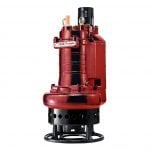
Tampa 437 Submersible Slurry Pumps – 4″ / 476 GPM / 5 HP
The durable and efficient DAE Pumps Tampa 437 provides improved suction and movement of solids up to 1-inch through a 4-inch discharge. The ergonomic Tampa 437 submersible slurry pumps transfer solids and liquids at a flow rate of up to 476 GPM and with 5 HP. Read More…
Submersible Slurry Pumps
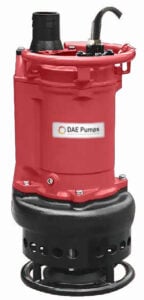
Lansing 340 Submersible Slurry Pump – 3″ / 435 GPM / 5.5HP
The Lansing 340 submersible slurry pump has a 4kW or 5.5HP, and it is non-clogging and can handle the most challenging solids. The high-efficiency, high chrome agitator, is capable of lifting 2.5-inch solids. For duty use, the sturdy design incorporates heavy-duty bearings for shocks and overloads.
Submersible Slurry Pumps
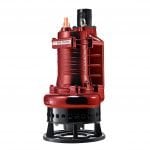
Tampa 455 Submersible Slurry Pumps – 4″ / 594 GPM / 7.5 HP
DAE Pumps Tampa 455 provides greater suction and movement of solids up to 1-inch through a 4-inch discharge. The ergonomic Tampa 455 submersible slurry pumps transfer solids and liquids at a flow rate of up to 594 GPM and with 7.5 HP. Read More…
Submersible Slurry Pumps
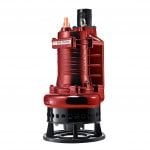
Lansing 460 Submersible Slurry Pump – 4″ / 635 GPM / 8HP
The Lansing 60 submersible slurry pump has a 6kW or 8HP, and it is non-clogging and can handle the most challenging solids. The high-efficiency, high chrome agitator, is capable of lifting 2.5-inch solids. For duty use, the sturdy design incorporates heavy-duty bearings for shocks and overloads.
Submersible Slurry Pumps
Tampa 475 Submersible Slurry Pumps – 4″ / 655 GPM / 10 HP
The reliable DAE Pumps Tampa 475 provides increased suction and movement of solids up to 1-inch through a 4-inch discharge. The ergonomic Tampa 475 submersible slurry pumps transfer solids and liquids at a flow rate of up to 655 GPM and with 10 HP. Read More…
Submersible Slurry Pumps
Lansing 690 Submersible Slurry Pump – 6″ / 845 GPM / 12HP
The Lansing 690 submersible slurry pump has a 9kW or 12HP, and it is non-clogging and can handle the most challenging solids. The high-efficiency, high chrome agitator, is capable of lifting 2.5-inch solids. For duty use, the sturdy design incorporates heavy-duty bearings for shocks and overloads.
Submersible Slurry Pumps
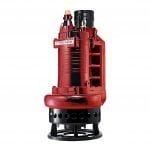
Tampa 4110 Submersible Slurry Pumps – 4″ / 819 GPM / 15 HP
The efficient DAE Pumps Tampa 4110 provides enhanced suction and movement of solids up to 1-inch through a 4-inch discharge. The ergonomic Tampa 4110 submersible slurry pumps transfer solids and liquids at a flow rate of up to 819 GPM and with 15 HP. Read More…
Submersible Slurry Pumps
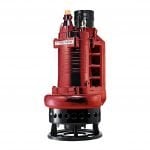
Tampa 6110 Submersible Slurry Pumps – 6″ / 977 GPM / 15 HP
The DAE Pumps Tampa 6110 provides high suction and movement of solids up to 1.4-inches through a 6-inch discharge. The ergonomic Tampa 6110 submersible slurry pumps transfer solids and liquids at a flow rate of up to 977 GPM and with 15 HP. Read More…
Submersible Slurry Pumps
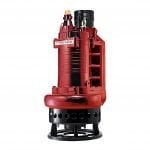
Tampa 6150 Submersible Slurry Pumps – 6″ / 1136 GPM / 20 HP
DAE Pumps Tampa 6150 provides enhanced suction and movement of solids up to 1.4-inches through a 6-inch discharge. The ergonomic Tampa 6150 submersible slurry pumps transfer solids and liquids at a flow rate of up to 1136 GPM and with 20 HP. Read More…
Submersible Slurry Pumps
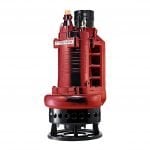
Tampa 6150-L Submersible Slurry Pumps – 6″ / 1453 GPM / 20 HP
The highly efficient DAE Pumps Tampa 6150-L provides even greater suction and movement of solids up to 1.4-inches through a 6-inch discharge. The ergonomic Tampa 6150-L submersible slurry pumps transfer solids and liquids at a flow rate of up to 1453 GPM and with 20 HP. Read More…
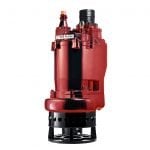
Submersible Slurry Pumps
Tampa 6220 Submersible Slurry Pumps – 6″ / 1268 GPM / 30 HP
DAE Pumps Tampa 6220 provides ideal suction and movement of solids up to 1.2-inches through a 6-inch discharge. The ergonomic Tampa 6220 submersible slurry pumps transfer solids and liquids at a flow rate of up to 1268 GPM and with 30 HP. Read More…

Submersible Slurry Pumps
Tampa 8220 Submersible Slurry Pumps – 8″ / 1664 GPM / 30 HP
The reliable DAE Pumps Tampa 8220 provides the highest suction and movement of solids up to 1.4-inches through an 8-inch discharge. The ergonomic Tampa 8220 submersible slurry pumps transfer solids and liquids at a flow rate of up to 1664 GPM and with 30 HP. Read More…
Submersible Slurry Pumps
Lansing 8150 Submersible Slurry Pump – 8″ / 1640 GPM / 20HP
The Lansing 8150 submersible slurry pump has a 15kW or 20HP, and it is non-clogging and can handle the most challenging solids. The high-efficiency, high chrome agitator, is capable of lifting 2.5-inch solids. For duty use, the sturdy design incorporates heavy-duty bearings for shocks and overloads.
Submersible Slurry Pumps
Lansing 8220 Submersible Slurry Pump – 8″ / 1585 GPM / 30HP
The Lansing 8220 submersible slurry pump has a 22kW or 30HP, and it is non-clogging and can handle the most challenging solids. The high-efficiency, high chrome agitator, is capable of lifting 2.5-inch solids. For duty use, the sturdy design incorporates heavy-duty bearings for shocks and overloads.
Accessories
Get turnkey solutions that include dredge hoses, slurry flow meters, power units, tanks for the collection and storage of slurry, and more. These accessories, such as tanks, are designed to integrate seamlessly into the overall pumping process, ensuring efficient material handling and process optimization. Choose from multiple sizes of slurry hoses for the transferring of materials, wireless flow meters for measuring the flow rate in gallons per minute of liquid, and power units for operation. Parts are always in stock and available for immediate shipping to anywhere in the US and the world.
Maintenance and Repair
Regular maintenance is essential for ensuring the optimal performance and longevity of slurry pumps, including electric slurry pumps and submersible slurry pumps. In demanding applications such as mining, dredging, and construction, pumps are often exposed to high viscosity slurries, abrasive materials, and challenging conditions that can accelerate wear and increase the risk of clogging. To address these challenges, modern slurry pumps are constructed with wear resistant materials and specially designed impellers and wear parts, significantly reducing the frequency of repairs and minimizing downtime.
One of the standout features of today’s electric slurry pumps is their easy maintenance. Many models are engineered for quick and straightforward replacement of wear parts and seals, allowing operators to perform routine maintenance with minimal disruption to operation. This not only helps to keep operating costs and energy consumption in check, but also ensures that the pump continues to deliver efficient and reliable performance, even when handling tough materials like fly ash or sediment.
Regular inspection and verification of key pump components—such as the impeller, seals, and pressure systems—are crucial for identifying signs of wear before they develop into major issues. By adjusting the impeller and replacing worn parts as needed, operators can optimize the pump’s efficiency and extend its service life. This proactive approach to maintenance is especially important in industries where downtime can be costly and where the security and reliability of pumping systems are paramount.
In addition to in-house maintenance, many manufacturers offer specialized repair services, spare parts, and expert technical support to help operators maintain the quality and performance of their slurry pumps. When selecting a pump, it’s important to consider not only its suitability for your specific application, but also the maintenance requirements and support services available. By investing in high-quality, wear resistant pumps and adhering to a regular maintenance schedule, operators can reduce operating costs, minimize downtime, and ensure safe, efficient operation across a wide range of industries.
Ultimately, prioritizing maintenance and repair is key to maximizing the productivity and reliability of your slurry pumping systems. Regular verification and prompt response to any issues help maintain the security and efficiency of your operation, allowing you to meet the demands of even the most challenging pumping applications.

Slurry Hoses

Flow Meters

Hose & Pipe Floats
