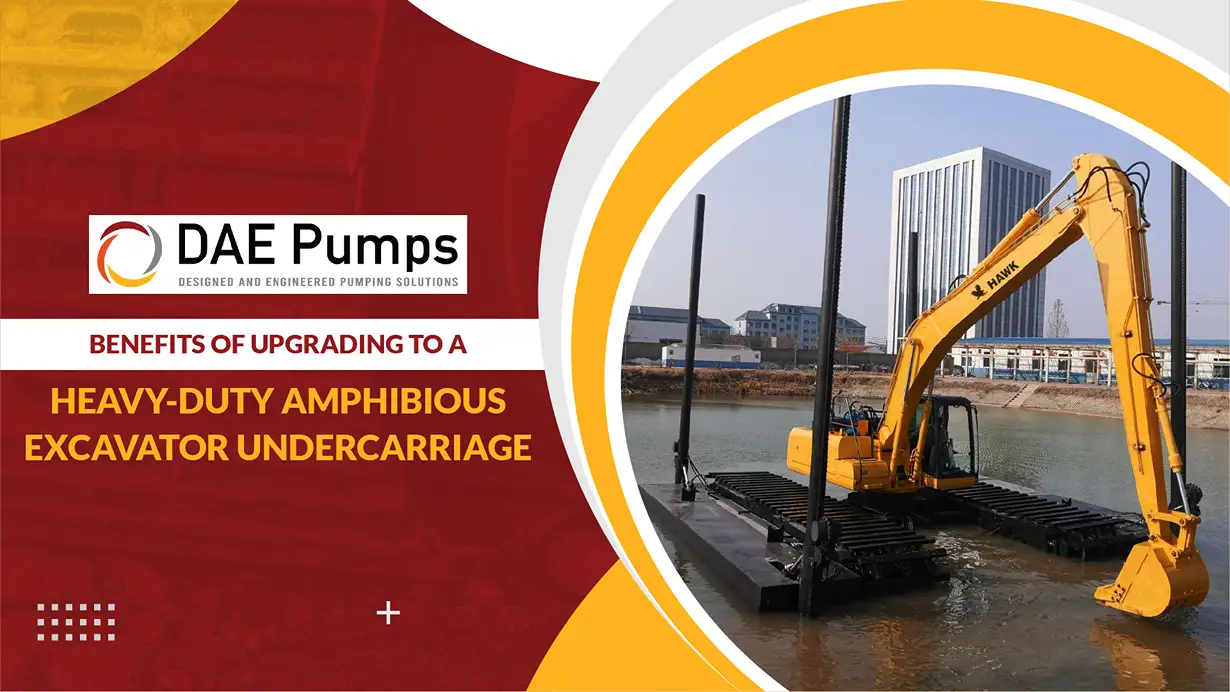
The amphibious excavator undercarriage plays a vital role in converting a normal excavator to a multi-terrain machine. This is integral to operations such as dredging, wetland restoration, mining, and flood control. An amphibious excavator undercarriage enables a normal excavator to maneuver through marshes, swamps, and riverbeds where a convention excavator might sink or get stuck. This can be critical in emergency operations and when operators cannot afford downtime.
A standard amphibious excavator undercarriage is usually enough for most situations, but there are times when it is not up to the task. These situations call for a heavy-duty excavator undercarriage. They provide measurable gains in reliability, stability, and operating efficiency. This blog will explore why contractors and operators should upgrade from a standard amphibious excavator undercarriage to a heavy-duty amphibious excavator.
Why the Undercarriage Matters
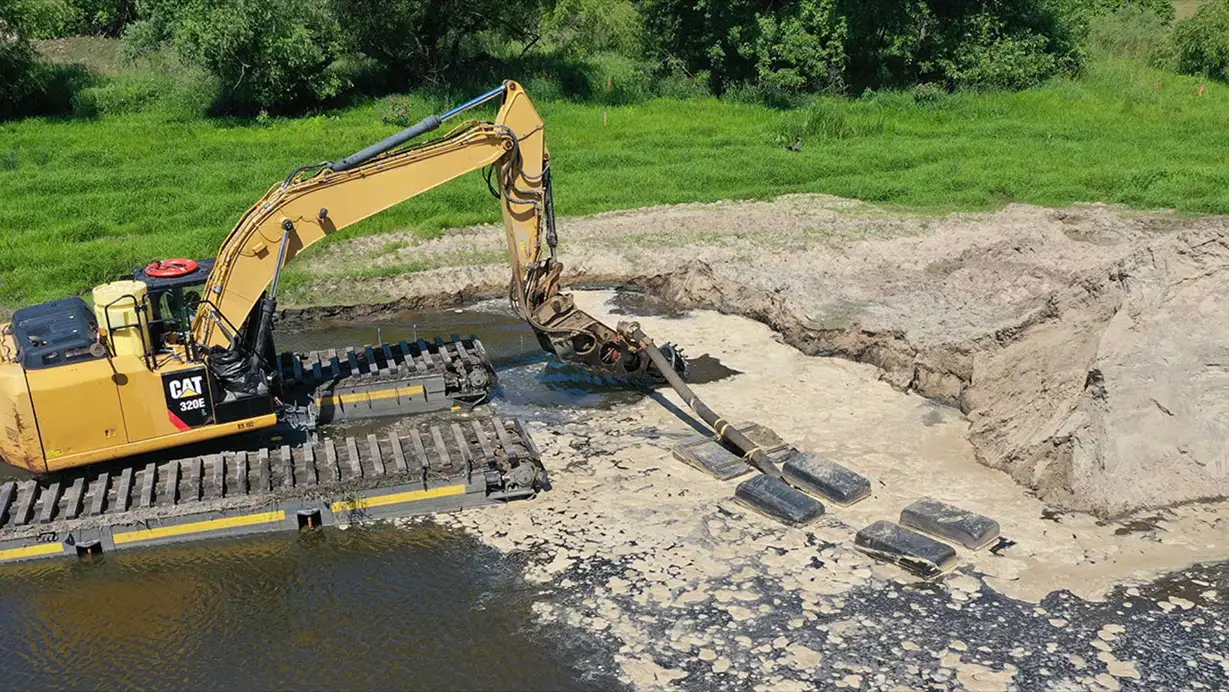
As most operators and contractors know, not all the dredging sites are on solid ground for excavators to move on. The amphibious excavator undercarriage is the key to maneuvering wet or unstable terrains. While land-based machines rely on their tracks, amphibious excavators depend on pontoon-style undercarriages for buoyancy and traction. For the amphibious excavator’s undercarriage to maintain even ground pressure and operate safely on soft terrain without losing stability, it needs a very solid design.
Key roles of the undercarriage include:
- Supporting the full machine weight while maintaining flotation
- Providing traction and balance in mud, silt, and shallow water
- Reducing ground pressure to prevent sinking
- Absorbing operational stress during excavation and travel
Even though a well-designed excavator undercarriage can overcome all the above-mentioned challenges, it is subject to limitations.

Limitations of Standard Undercarriages
Standard excavator undercarriages are suitable for light-duty operations but fall short in long-term or heavy-load projects. Their performance is limited by a simplified design and the materials used in construction. This becomes a factor when working under harsh conditions. Some of the common challenges faced by standard amphibious excavator undercarriage are:
- Flotation limits: There is a risk of sinking in soft terrain due to narrow pontoons and smaller chambers, which reduce buoyancy.
- Poor Traction: Slippage or stalling in deep mud can occur if the system uses a single hydraulic drive, which restricts torque output.
- Premature Wear: Standard steel components and polymer track pads often show cracking or rust within 800-1000 hours of use. Abrasive or corrosive conditions exacerbate this.
- Higher Maintenance: Frequent chain and pad replacements lead to costly downtime
There are examples from around the world to showcase why the standard excavator undercarriage might not be sufficient. For example, the case of the Vietnam River Dredging. The case study shows that the equipment initially used was standard amphibious equipment. The equipment encountered multiple overturn risks during high tide periods. The reported monthly maintenance cost exceeded $80,000.
Overcome Limitations with Heavy-Duty Amphibious Excavator
Amphibious excavator undercarriage for heavy-duty is built different. They have advanced materials, a stronger drive system, and a design optimised for challenging operations. Some of the upgrades compared to the standard amphibious excavator undercarriage include:
- Reinforced Construction: The use of marine-grade high-strength steel, along with heat-treated components, improves structural integrity and fatigue resistance.
- Enhanced Traction Systems: Mobility in deep or soft terrains is improved with multi-motor drive setups. This delivers twice the traction as compared to a standard amphibious excavator undercarriage.
- Corrosion Resistance: Pontoon life is extended by marine-grade coatings and epoxy finishes to protect against rust in saltwater and acidic marshes.
- Improved Stability: Wider pontoons, optional side pontoons, and spud attachments maintain balance in deep or turbulent waters.
When comparing the standard and heavy-duty amphibious excavator undercarriages, the latter has a clear advantage across all aspects. Be it material used on construction, stability, traction, or maintenance, the heavy-duty amphibious excavator comes on top. Some of the success stories include one from the Society of American Military Engineers. The Galveston District project was commenced to deepen and widen the Houston Ship Channel with minimal disruption to the sensitive wetlands. The project was a success because the amphibious excavator undercarriage used was an advanced, multi-dive system with GPS machine control.

Total Cost of Ownership and ROI
In projects involving unpredictable terrain, there is always a chance the cost will increase. One of the main reasons is the amphibious excavator undercarriage. The undercarriage is the first component exposed to deep mud, submerged debris, and prolonged stress. The tolerance level of a standard amphibious excavator undercarriage to these unforgiving conditions will be low. But with an upgrade to a heavy-duty amphibious excavator, the likelihood of failure, sinkage, or project delays can be avoided. Some of the advantages of the heavy-duty amphibious excavator undercarriage include:
- Higher structural tolerance in deep or soft terrain
- Lower likelihood of sinking, tilting, or traction loss
- Better resistance to abrasive slurry, tailings, or wetland soil
- Reduced the chance of track breakage or pontoon failure during operations
Speed Up Project Timelines
The upgraded amphibious excavator undercarriage will help the crew move faster and work with greater stability. The operators will be able to complete more cycles per hour when the machine stays level, gains traction, and carries attachments without strain. Some key advantages of the heavy-duty amphibious excavator that will reduce the overall completion time of the projects include:
- Faster travel across soft ground or submerged terrain
- Reduced repositioning because buoyancy remains stable
- Smoother excavation or pumping cycles due to steady platform support
- The ability to work in deeper water without modifications
Reduced Emergencies, Downtime, and Component Replacement Leads to Long-Term Savings
One of the major factors influencing Return-on-Investment is long-term maintenance and repair expenses. Standard undercarriages typically require frequent servicing due to track stretch, corrosion, cracking, or pontoon wear. Long-term cost savings come from:
- Fewer emergency repairs that require costly on-site recovery
- Longer intervals between track, sprocket, or chain replacements
- Reduced corrosion-related failures in wet or acidic environments
- Lower maintenance labor due to simplified service access
Heavy-duty amphibious excavator undercarriages are manufactured from stronger materials along with a reinforced internal structure that can withstand thousands of hours of use. When we take a couple of years into account, the savings often compensate for the initial cost of the upgrade. A machine that has fewer breakdowns remains available for more billing hours and supports consistent revenue generation.
How to Choose the Right Amphibious Excavator Undercarriage Upgrade
Matching Pontoon Size, Thickness, and Buoyancy to Excavator Class
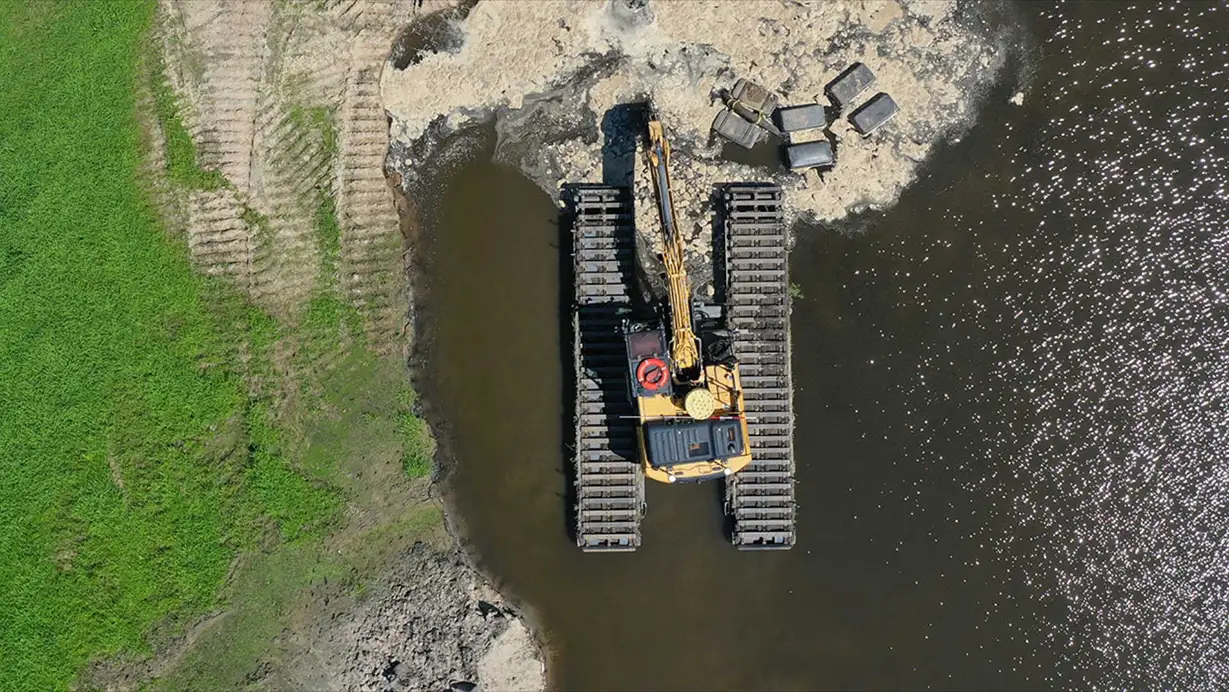
The first step in choosing the right amphibious excavator undercarriage is matching the excavator’s size and weight with the pontoon’s specifications. The factors to consider when selecting the undercarriage size should not stop at the base machine. Fuel, crew requirements, attachments, and safely margins in varying water depths should also be considered.
Some of the key aspects to factor into the considerations are:
- Pontoon length and width that provide adequate flotation for the excavator class
- Steel wall thickness that prevents deformation under constant load
- Buoyancy ratings that account for accessory weight and variable soil conditions
- Stability margins that allow safe operation in shallow and deeper water
When Side Pontoons, Spuds, and Long Reach Booms Require Reinforced Systems
Different projects have different stress levels on the undercarriage. Certain environments and attachments also place a significantly greater strain on the undercarriage. Attachments like spuds add vertical anchoring loads, while side pontoons add additional buoyancy and change weight distribution. Operators should consider reinforced undercarriage systems when:
- Working with long reach booms for dredging or slope cleaning
- Using hydraulic spuds to stabilize the machine in flowing water
- Adding side pontoons for increased buoyancy in deep or soft terrain
- Handling heavy pumps or specialized dredging attachments
- Operating in tidal zones or areas with fluctuating water levels
Evaluating Material Quality, Coatings, and Drive Components
Material selection is a core aspect to extend the lifespan of the excavator undercarriage. High-strength alloys, heat-treated components, and corrosion-resistant coatings give an edge over standard amphibious excavator undercarriage materials. The design of the drive system also plays a crucial role. The mobility of the machine depends on an efficient drive system in soft, drag-heavy terrains. Points to evaluate before making a decision are:
- Quality of pontoon steel grade and internal reinforcement
- Type and thickness of corrosion protection coating
- Whether welds are sealed, continuous, and thoroughly inspected
- Track shoe material and wear resistance
- Chain, sprocket, and idler durability
- Multi-motor drive systems that improve traction and torque
Here is a checklist for the amphibious excavator undercarriage that you can use as a reference during your machine upgrade
- Pontoon Size, Thickness, and Buoyancy
- Pontoon dimensions match the excavator class
- Steel wall thickness is sufficient for the expected loads
- Buoyancy rating accounts for machine weight plus attachments
- The stability margin is adequate for deep or soft terrain
- Pontoon design supports safe operation in varying water depths
- Side Pontoons, Spuds, and Long Reach Requirements
- Long-reach booms will not exceed flotation limits
- Side pontoons are properly sized and compatible
- Spuds can be safely anchored without stressing the pontoons
- Heavy dredging tools will not destabilize the machine
- Tidal or fluctuating water conditions are considered
- Material Quality, Coatings, and Drive System
- Pontoon steel grade is high-strength and reinforced internally
- Anti-corrosion coatings are marine-grade and applied correctly
- Welds are continuous, sealed, and inspected
- Track shoes, chains, and sprockets are abrasion-resistant
- Drive system uses multi-motor or high-torque configurations
- Components are rated for mud, vegetation, and slurry conditions
- Specification and Compatibility Checks
- Underframe supports the total operating weight under full load
- Buoyancy reserve exists for safety and uneven terrain
- Track width and ground pressure suit project environments
- Undercarriage is compatible with all planned attachments
- Maintenance access points are easy to reach
- Wear parts and replacements are readily available
- Warranty coverage is clear and comprehensive
- Case references exist for similar work conditions

The Long-Term Value of Choosing a Heavy-Duty Amphibious Excavator
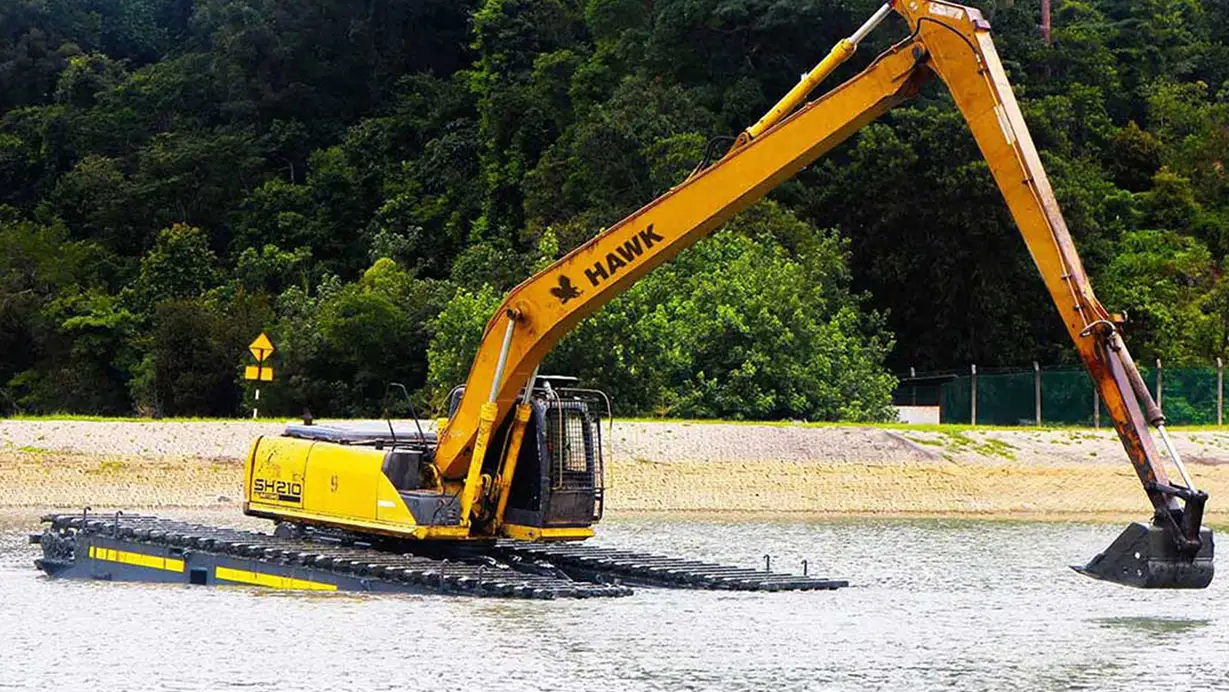
To summarize, if you want to speed up your project, reduce downtime, and reduce repair and maintenance costs, upgrading to a heavy-duty amphibious excavator undercarriage is the right decision. In the long run, the ROI will be breakeven or exceed the initial investment for the upgrade. It also provides a clear advantage when working in wetlands, rivers, tailings ponds, and other soft terrain environments.
Contractors aiming to improve reliability and expand their operational capabilities can explore our undercarriage solutions and related equipment here. You can also contact our DAE Pumps experts for customized recommendations.